

The times they are a-changin’
The UN Security Council was created in 1945. In the 80 years since, the world has changed dramatically. The same cannot be said of the Security Council.
It is one of the UN’s most important organs, charged with ensuring international peace and security and fostering cooperation to solve international problems. The Security Council is the only UN body with the power to make and enforce legally binding resolutions. It is composed of 15 member states: five permanent seats (held by China, France, Russia, UK, and US) and 10 two-year rotating seats.
Its considerable power, recent controversial UN resolution votes, and frustration over the veto power of its permanent members have catalysed calls for reform.
So today we look at whether the Security Council’s structure remains fit for today’s world.
— Joe Kraus, Senior Policy Director, ONE Data
This week’s newsletter is drawn from our new data story, “Is the UN Security Council fit for today’s changing world?” You can read it here.
4 things to know
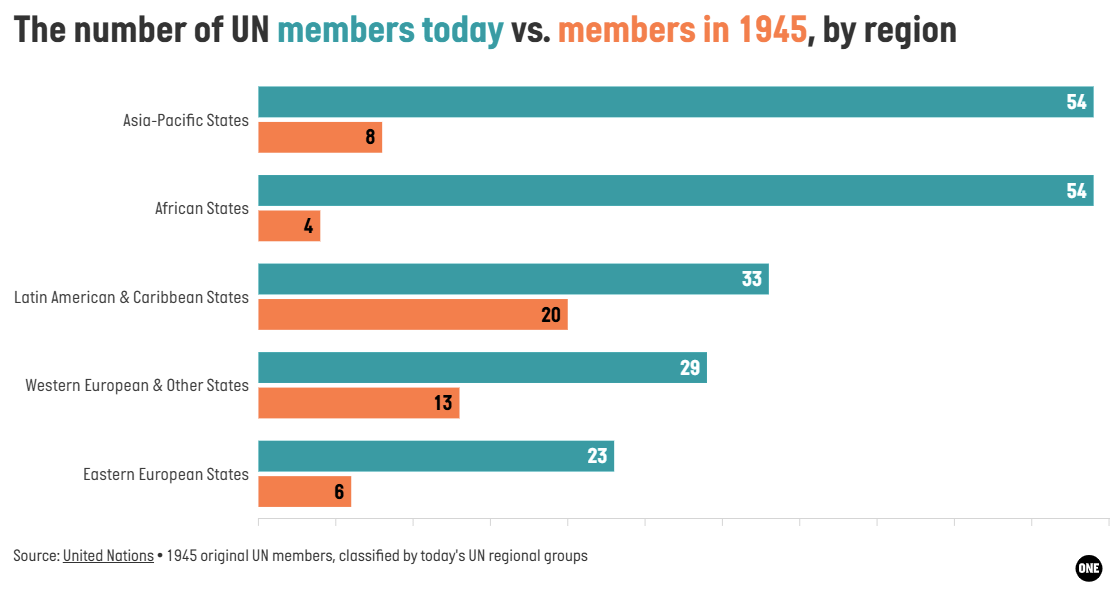
1. The world today looks very different from the world that existed in 1945. For starters, the number of countries has nearly quadrupled. The UN has 193 members today, compared with 51 at its inception. That expansion is most notable in Africa and Asia, whose UN membership grew more than 13-fold and nearly 7-fold.
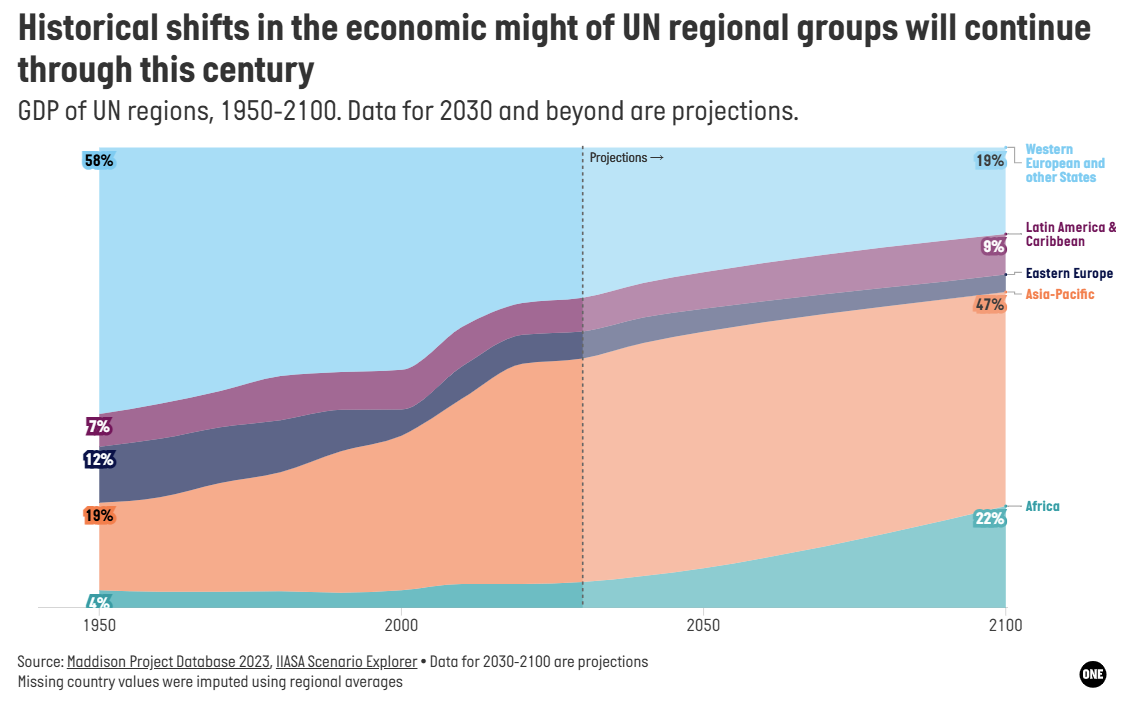
The global economy has been transformed over that period, with significant gains made in the Asia-Pacific region. That trend will continue, with Africa in particular gaining economic clout between now and the end of the century.
Proponents of Security Council reform point out that seat apportionment does not reflect significant demographic shifts.
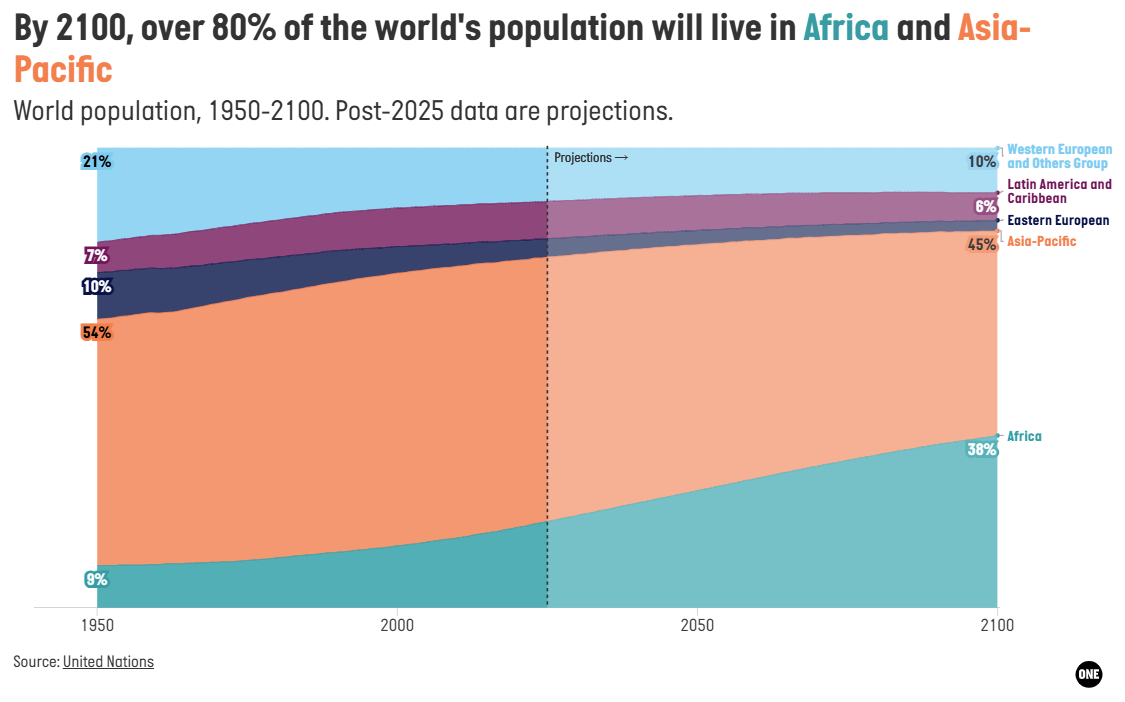
As a result, certain regions, particularly the Security Council’s Western European and Other States group (which includes Australia, Canada, and the US), are overrepresented based on population size, while the Asia-Pacific region is vastly underrepresented.
The Asia-Pacific group accounts for 57% of the world’s population, yet holds just one-fifth of the Security Council’s seats (including one permanent seat). Africa accounts for nearly one-fifth of the world’s population, but has no permanent seat. The Western European and Other States group accounts for 12% of the global population, but holds one-third of the seats and three of the five permanent seats.
2. Higher-income countries foot the bill. The five permanent members are expected to pay an average of 61.7% for peacekeeping operations between 2025 and 2027. Higher-income countries account for nearly all expected contributions, while lower-income countries pay very little.
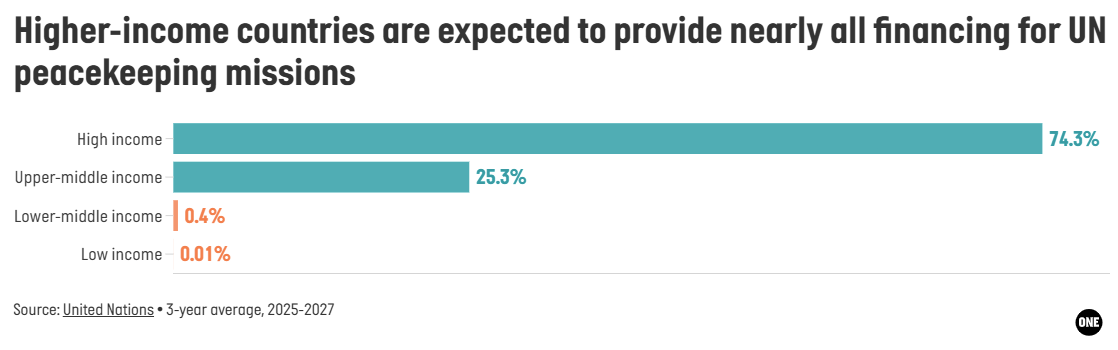
Security Council contributions follow the same scale used for the UN regular budget, but are then adjusted to give least-developed countries a discount. That effectively redistributes a portion of their contributions to the five permanent members, who pay a premium.
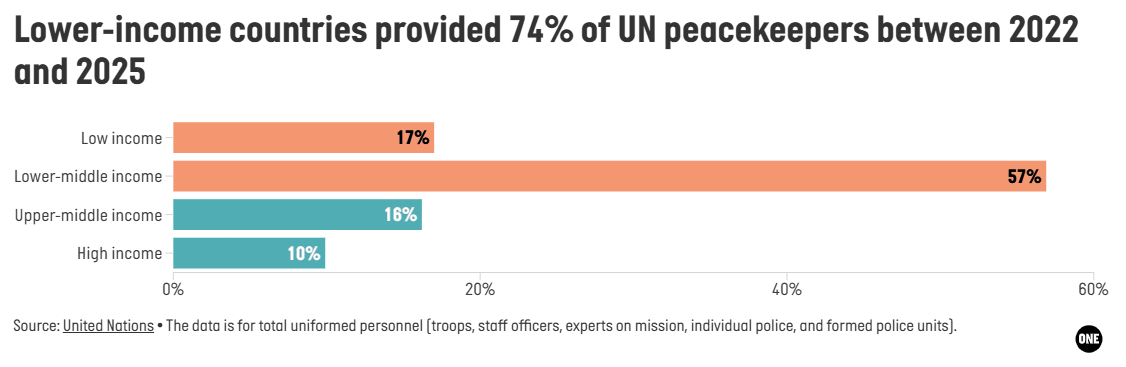
3. The burden of UN peacekeeping falls on lower-income countries. Of the average 67,709 UN peacekeepers globally between 2022 and 2025, nearly three-quarters came from low- and lower-middle-income countries. High-income countries supplied 10%.
Since its inception, the Security Council has engaged in over 70 peacekeeping missions. The vast majority have occurred in Africa and Asia-Pacific. Only two have taken place in the Western European & Other States region.
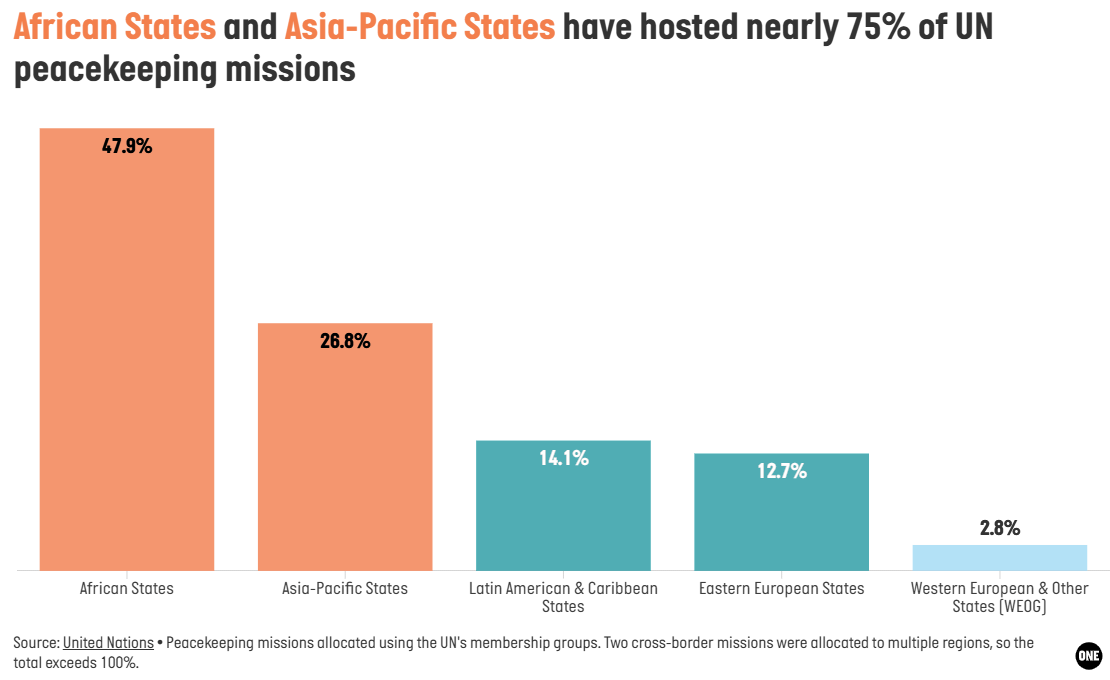
That reality has fueled calls for reform from those who believe that the regions most impacted by insecurity and conflict ought to have a greater say in the decisions impacting them.
4. A growing chorus of voices are demanding reform. African leaders—and UN Secretary-General António Guterres—have called for Africa to receive two permanent seats and two additional non-permanent seats. They contend that this would better reflect Africa’s demographic might, its contribution to peacekeeping, and the fact that African countries are disproportionately affected by Security Council decisions.
For the Security Council’s decisions to have relevance and credibility in a changed world, it may very well need to consider better aligning its representation with modern realities.
FROM THE ONE TEAM:
David McNair on the outcomes of the Belt and Road Summit in Hong Kong,
Adrian Lovett on what the new UK Minister for International Development got right in her first major speech.
IN THE QUEUE:
Why proximity to power is not power at all.
The Africa Jobs Fund’s first 100 Days.
ONE Data provides cutting edge data, tools, and analysis so that we can fight together for a more just world. See for yourself.