

The battle for clean energy
Something I’ve been wondering a lot about recently is what oil company CEOs really think about the Iran war. Sure, their companies are making massive windfall profits. Maybe big bonuses await them at the end of the year. But surely they realise the long-term risk these short-term gains pose for their companies as countries and consumers around the world, tired and financially taxed by the world’s dependence on fossil fuels, race to embrace clean energy.
As Simon Stiell, UNFCCC chief succinctly put it: “Those who’ve fought to keep the world hooked on fossil fuels are inadvertently supercharging the global renewables boom.”
So below we look at the clean energy boom, what developing countries are doing to seize it, and what could prevent them from succeeding.
— Joe Kraus, Senior Director, ONE Data
3 things to know
1. A clean energy boom was underway before the Iran war. The share of global energy investments in clean energy steadily increased between 2015 and 2025, from 45% to 65%. That predates the surge in clean energy interest catalysed by the Iran war.
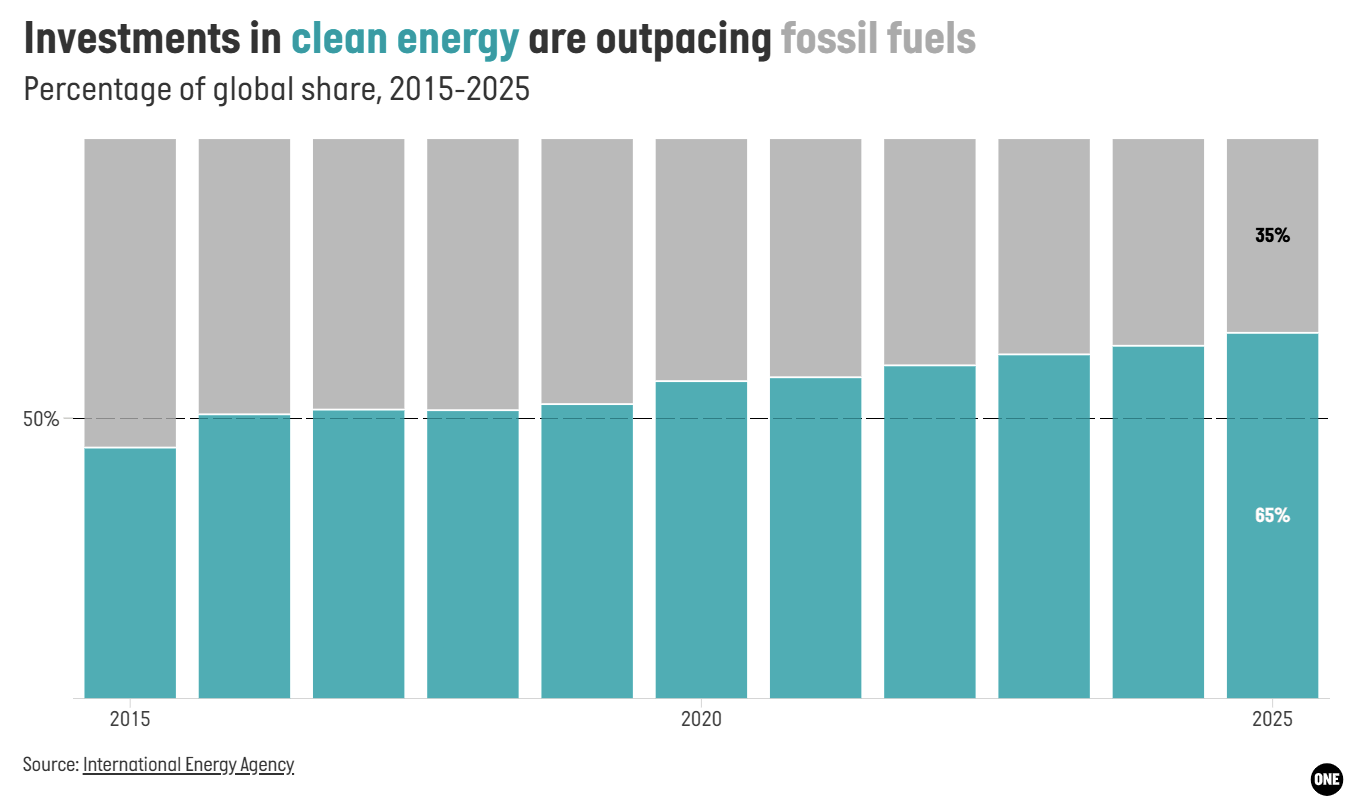
Renewables are the world’s fastest growing source of electricity. They’ve grown five times faster than gas and 16 times faster than coal since 2014. The use of coal and gas to generate electricity has plateaued over the past five years.

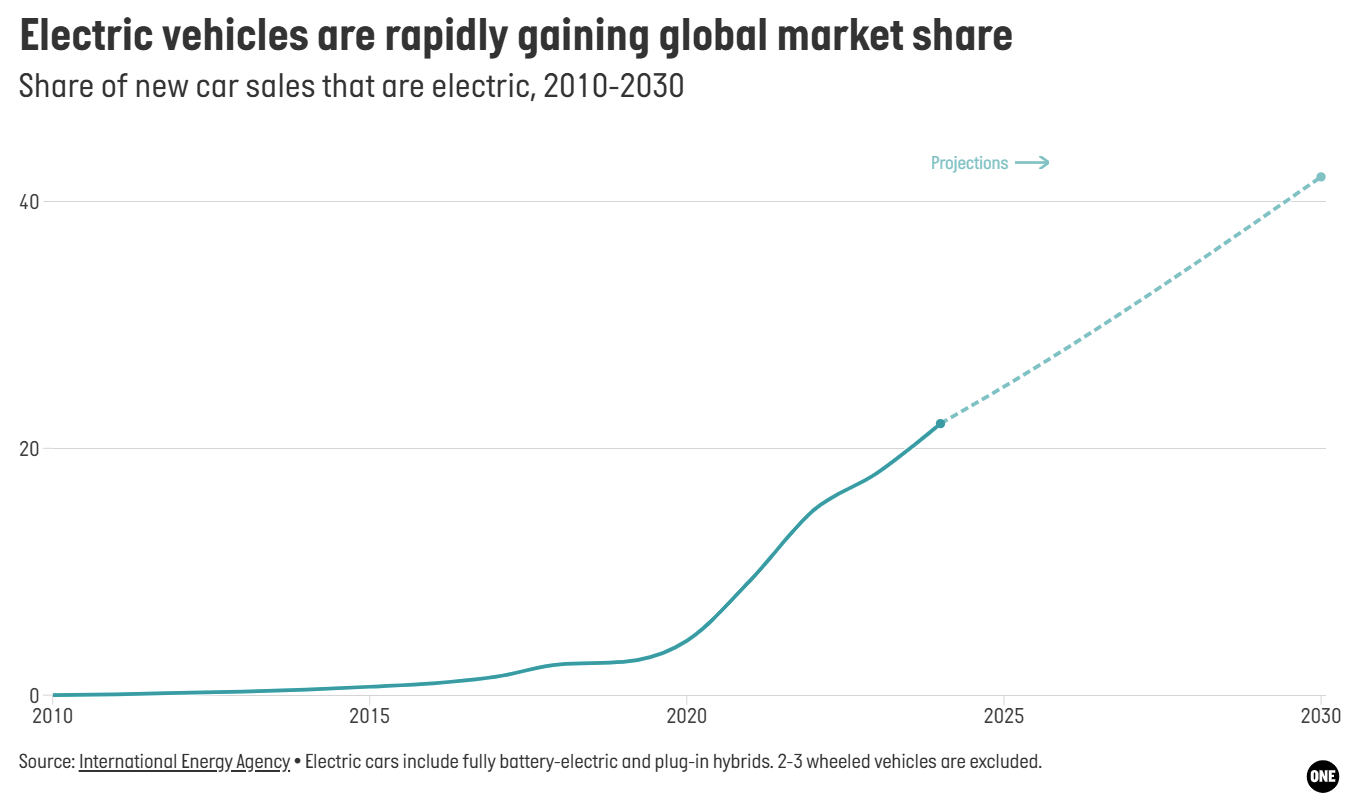
The shift to clean energy is also visible in the types of cars we are driving. Electric vehicle sales have increased rapidly since 2020. EV’s are projected to account for 42% of all new cars sales by 2030.
2. Green bonds are booming. The Iran war has sparked a surge in the issuance of green bonds from developing countries looking to fund clean energy projects to reduce their reliance on oil. Green bond issuances jumped by 53% in the first four months of the year, to $24 billion. That’s already nearly as much as in all of 2023, a record-setting year. That includes Côte d’Ivoire’s first ever green bond—notably fully funded by African institutions—to build the country’s largest solar plant, which is expected to come online next year. Investors certainly don’t mind the surge in green bonds, which provided a 10.7% return last year and tend to be less volatile than other asset classes.
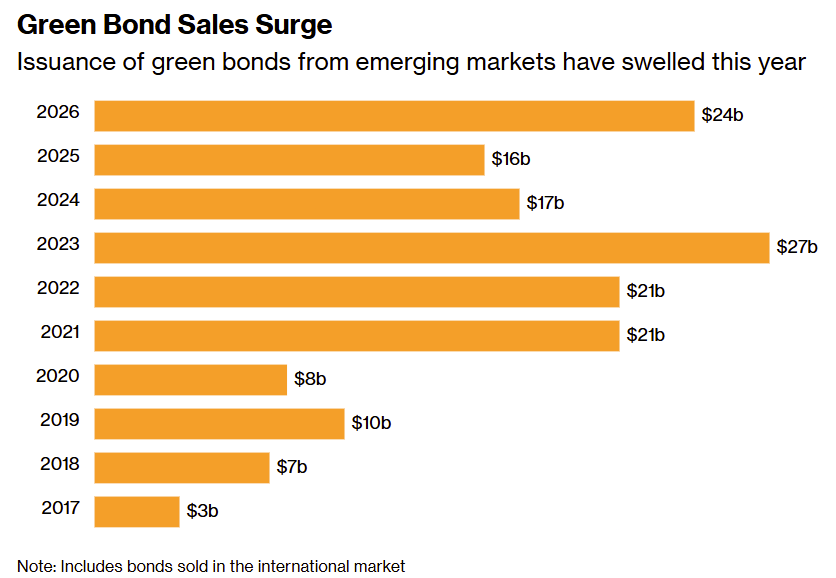
Source: Bloomberg
3. Insufficient climate finance and high debt levels could derail clean energy’s momentum. The upfront costs of clean energy infrastructure are significant, and can make it challenging for countries with stretched budgets to take the plunge. That’s where climate finance could play a critical role. But donor countries aren’t providing the levels of financing needed, though development banks like the World Bank have scaled up climate finance in recent years (a trend that pressure from the US may reverse).
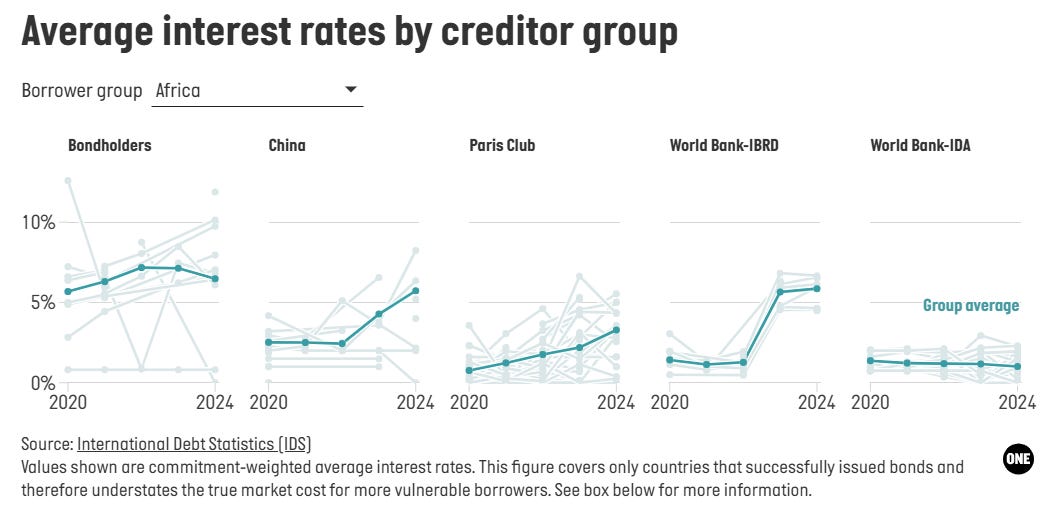
That’s why countries understandably are turning to the debt market. But as Sara Harcourt, ONE’s Senior Director for Development Finance, notes, “the timing couldn’t be worse.” Interest rates across all creditors nearly doubled between 2020 and 2024, a product of the pandemic and Russia’s war in Ukraine. Just as they had begun to ease, the Iran war sent new shocks through the global system, putting additional pressure on already debt-saddled countries. That’s forced countries to choose between foregoing investments in clean energy or taking on additional, expensive debt to finance it. Either option carries long-term consequences.
FROM THE ONE TEAM:
ONE names Ambassador Mark Green as its next President and CEO.
ONE launched its “Africa Makes the World” campaign ahead of Africa Day.
Luca Picci created a data tool that makes it easier to access UNESCO data.
Justin McAuley on the impossible choices facing people assaulted by violence in Sudan.
David McNair visited an early birthplace of vaccines and came away with an appreciation for what we’ve accomplished and where we’re missing opportunities to do more.
IN THE QUEUE:
Where’s the money for Africa’s clean energy?
China and Europe form a carbon alliance as the US bets on fossil fuels.
African economies are more resilient than ever.
ONE Data provides cutting edge data, tools, and analysis so that we can fight together for a more just world. See for yourself.