

Tarnished gemstone
“Diamonds are forever.” That catch phrase, crafted in 1947 for De Beers, has—much like the product it was designed to sell—proved to be very durable. It’s been a mainstay of ad campaigns ever since, and has inspired movies, music, and even a book.
Diamond revenues, on the other hand, are not as permanent, as diamond-exporting countries are finding out. The market for natural diamonds is amid a historic reset.
It may never recover.
That has major implications for the countries that rely on diamond revenues to drive their economies and fund health systems and schools. They are experiencing an abrupt wake-up call without many good short-term solutions.
Turns out, diamonds are forever, until they aren’t.
— Joe Kraus, Senior Policy Director at ONE Data
3 things to know
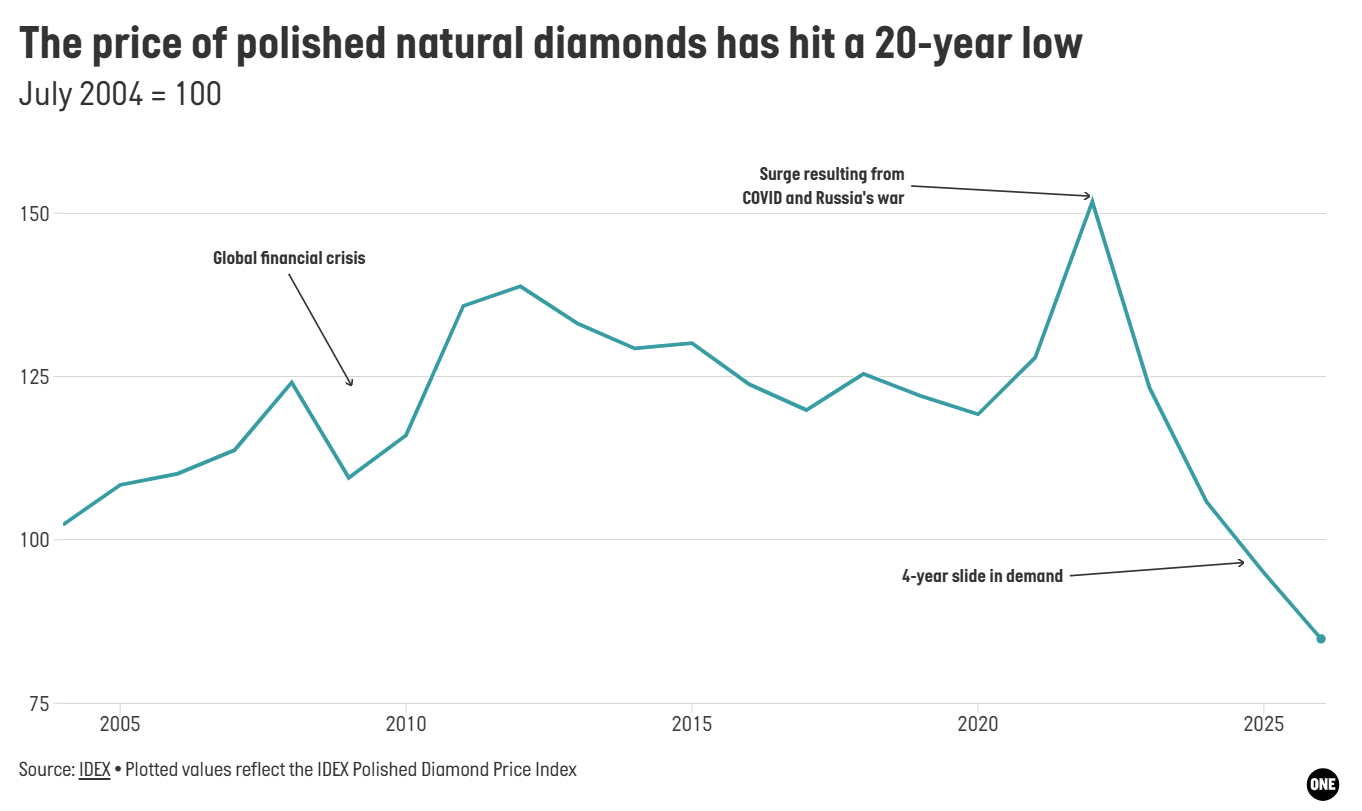
1. Diamond prices have dropped precipitously in recent years. Since hitting a 20-year high in March 2022, prices have declined by 47%. That’s in large part due to the surge in demand for lab-grown diamonds (though US tariffs certainly haven’t helped).
Explore an interactive version of the chart
Why it matters: The average price for polished natural diamonds is at its lowest point in over two decades, lower today than during the global financial crisis. In response, a group of diamond-producing countries in southern Africa have joined forces to invest 1% of annual diamond revenues into a global marketing campaign to put the shine back on natural diamonds. They launched a “Real. Rare. Responsible” campaign to brand natural diamonds as unique and ethically sourced.
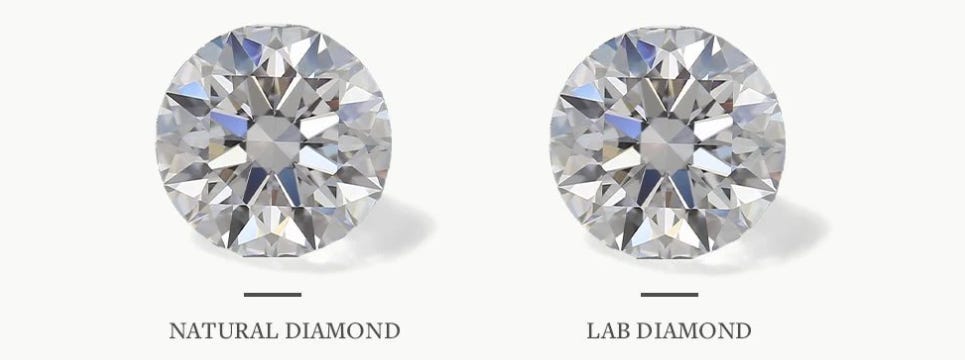
2. Lab-grown diamonds enjoy several market advantages. They can be produced relatively rapidly, in weeks instead of aeons (the fancy term for billions of years), like their natural counterparts. That makes lab diamonds a lot less expensive—they are generally 70-85% cheaper at retail than natural diamonds. And concerns about “blood diamonds” have helped popularise synthetic diamonds, which are visually identical to the naked eye.
Can you tell the difference?
Source: With Clarity
Why it matters: Diamonds were always a stretch purchase for anyone not in an upper-income class. Synthetic diamonds have changed that. They’ve made it easier for people to enjoy the luxe of a diamond at a fraction of the cost. That has upended the natural diamond market. Lab-grown diamonds now account for 20% of global sales, up from 1% just a decade ago.
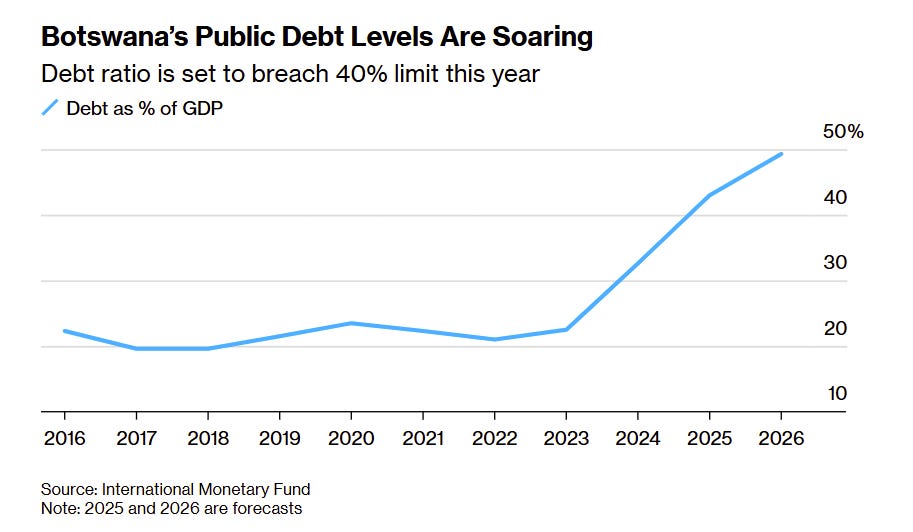
3. Diamond-producing countries are feeling the pain. Botswana—the world’s top diamond producer by value—relies on diamond revenues for 80% of its exports and a third of government income. Falling diamond prices have hit the country hard: Mineral revenues dropped 60% in 2025/26 from their long-term average. That caused Botswana to have the largest budget gap in sub-Saharan Africa last year. The country has taken on loads of new debt, causing its debt-to-gdp ratio to nearly double over the past two years, exceeding a legislative limit. Meanwhile, Botswana is sitting on a glut of diamonds for which it can’t find a buyer.
Source: Bloomberg
Why it matters: Botswana’s President Duma Boko has called the drop in diamond prices “a national social existential threat.” The government has been forced to cut spending and declared a public health emergency last August due to a shortage of medicines and medical equipment. And unlike oil—a cyclical natural resource that many countries are dependent upon—diamond prices are unlikely to rebound. The price drop is due to structural, not cyclical, factors. That reality is reflected in repeated devaluations of De Beers by its owner Anglo American Plc. The firm is reportedly trying to sell De Beers, the world’s largest diamond company.
FROM THE ONE TEAM:
Media: The great reversal: Why Africa is now paying more than it receives in global development finance.
IN THE QUEUE:
Trump advisers refine their Africa strategy
How a coup attempt in Nigeria is a stark warning to the region
Ghana and Google ink an AI education deal
ONE Data provides cutting edge data, tools, and analysis so that we can fight together for a more just world. See for yourself.