

Ghana’s wild ride
Ghana’s recent debt history follows a striking arc. The country went from heavily indebted in the early 2000s to a darling of the international bond market in the 2010s, only to default on its debt in 2022. Its prospects look better today, but its situation remains tenuous, especially given recent geopolitical volatility and global economic uncertainty.
In terms of debt, Ghana may be the canary in the coal mine. Thirty-two countries are in or at high risk of debt distress. Low- and middle-income countries hold $3.6 trillion in debt and will pay an estimated $457 billion this year to service that debt, and nearly as much in each of the next two years. G77 countries are spending over one-third of government revenues on debt payments, on average; in 36 countries, it’s more than half.
So looking at Ghana’s wild ride is instructive, both for what it means for Ghana’s 35 million people and for what it may portend for other countries.
— Joe Kraus, Senior Policy Director, ONE Data
A tale of debt, in 3 acts
Act 1. Success!. Ghana became the first graduate of the Heavily Indebted Poor Countries Initiative to issue a sovereign Eurobond in 2007. That $750 million debut, priced at 8.5%, was widely seen as a sign that Africa’s debt-relief era had given way to a new era of market-based finance. Over the subsequent 14 years, Ghana took advantage of relatively low interest rates. It went to international capital markets nine times, issuing $15.6 billion in Eurobonds.
Ghana’s debt has surged
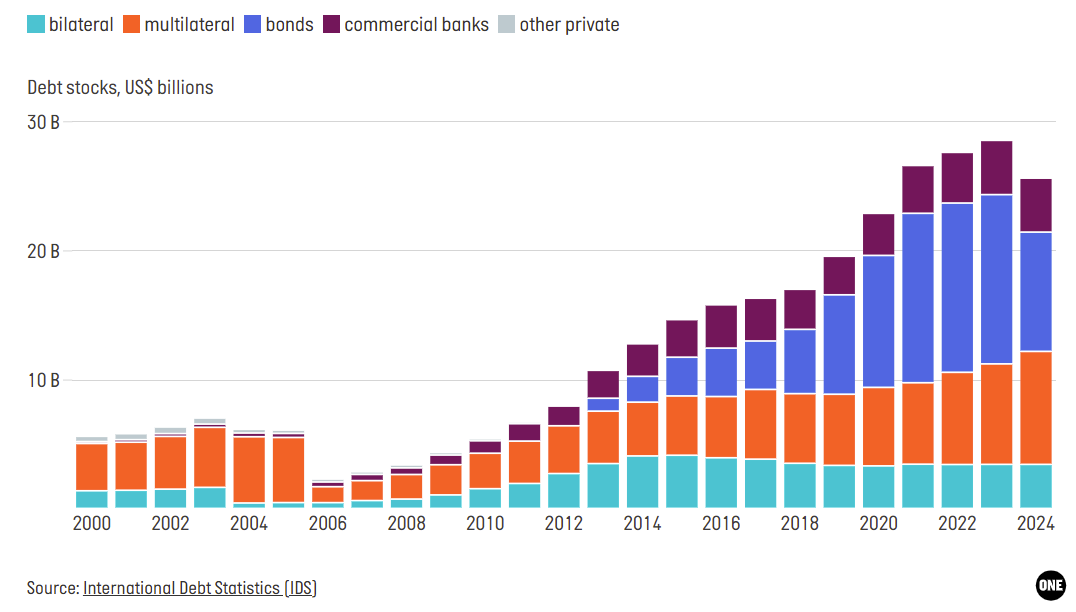
But that success was, in part, premised on the effective management of the country’s newly exploited oil wealth. When the price of oil plummeted in 2015, Ghana’s economy—and investor confidence—suffered. An IMF program helped stabilise both, and the country’s outlook brightened.
Act 2. Mess. Following COVID-19 and Russia’s invasion of Ukraine, interest rates surged to levels not seen in decades. That made borrowing more expensive. The average cost of borrowing for African countries rose 91% between 2020 and 2024, according to analysis by ONE Data.
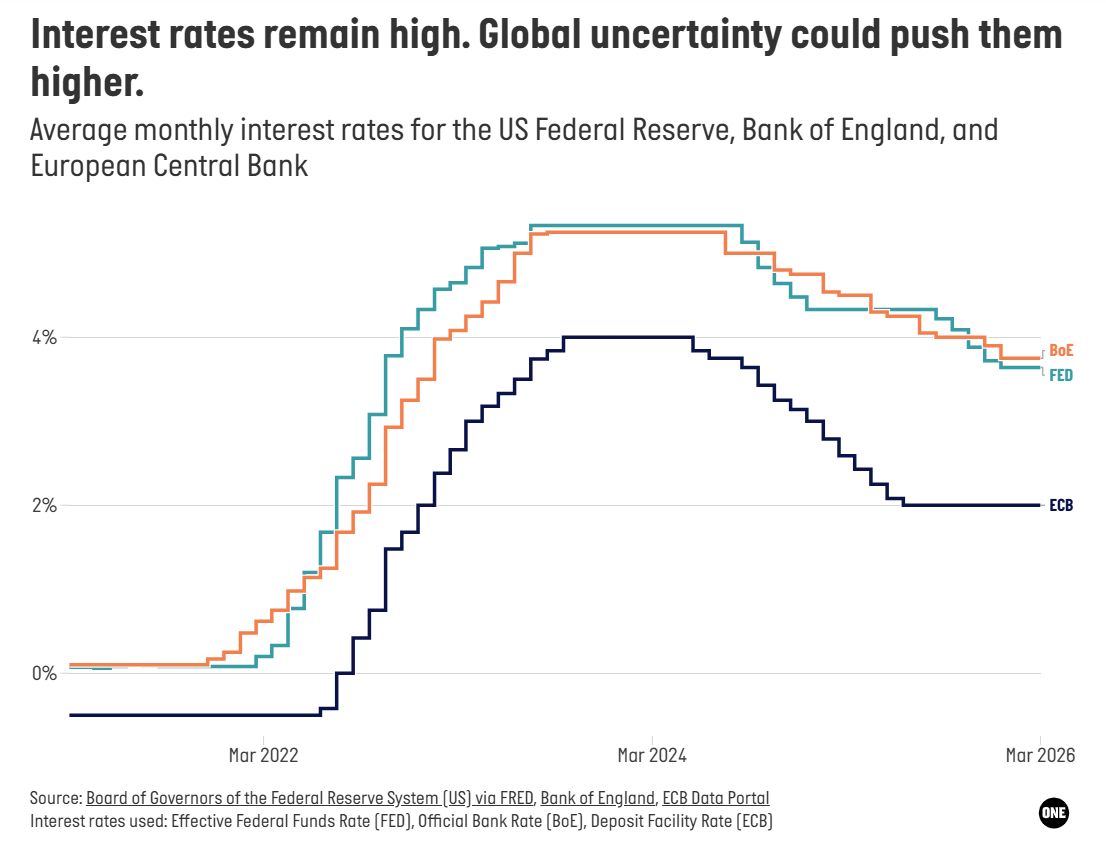
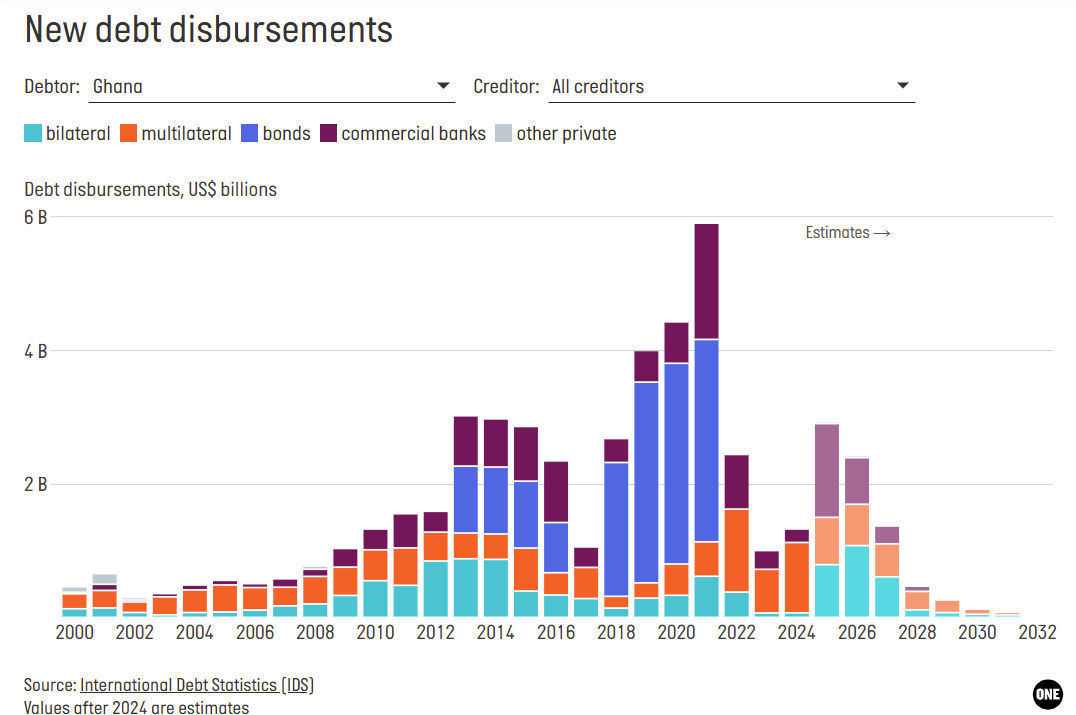
Ghana did not escape unscathed. Its borrowing had accelerated right before the global shocks hit; 70% of its borrowing occurred between 2018 and 2021. With interest rates climbing, Ghana’s high debt became unsustainably expensive. In December 2022, it defaulted on roughly $21 billion in debt obligations—including $13 billion in Eurobonds—and joined the Common Framework the following month to restructure its debt. A few months later, the IMF approved a 3-year, $3 billion loan. Ghana, the rising star of the 2010s, had fallen in dramatic fashion.
Act 3. A brighter future...? Since emerging from default in October 2024, Ghana has experienced a recovery. Inflation fell from 54% in 2022 to 3.4% in April 2026. Public debt as a share of GDP dropped from 90% in 2022 to 45%. The three big credit rating agencies upgraded Ghana’s credit rating. And the country is running a fiscal surplus.
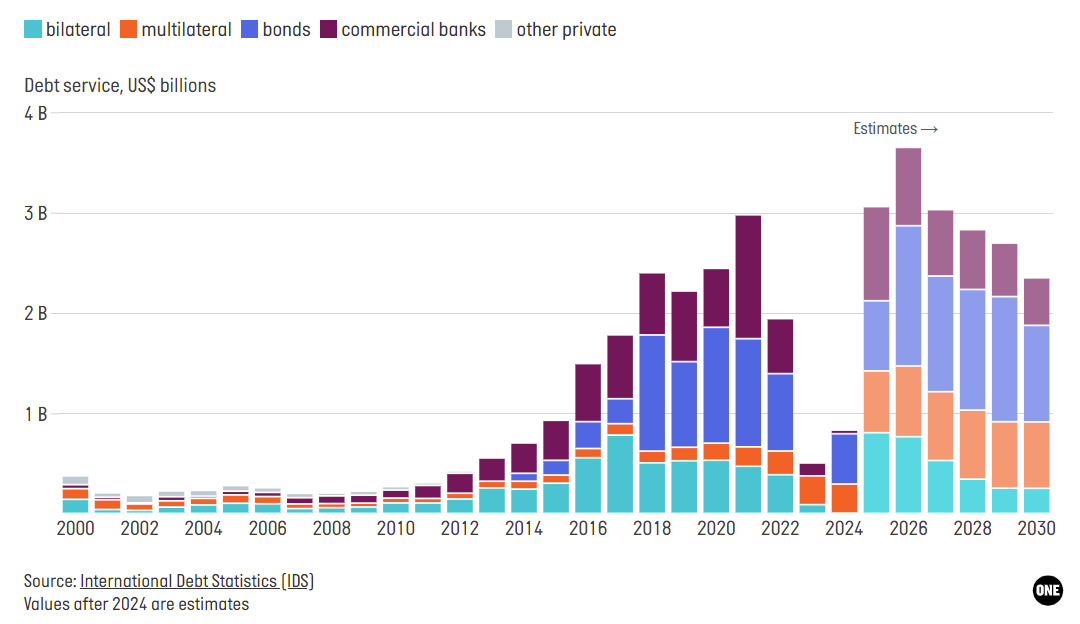
But the recovery is fragile. Looming on the horizon are several years of high debt service payments; they’ll hit just as IMF support ends, removing a critical safety net. Multilateral lending is down, jeopardising next year’s replenishment of the World Bank’s concessional lending arm, the International Development Association. That could impact the availability of cheap financing for Ghana and other lower-middle-income countries whose economic standing is fragile but whose concessional financing needs aren’t considered as critical as those of low-income countries.
Ghana’s debt service
FROM THE ONE TEAM:
Jorge Rivera and David McNair spoke about the future of data for development at the OECD.
David McNair summarised the outcomes of the Africa Forward Summit.
IN THE QUEUE:
Uganda’s pro-refugee policy is under strain.
African healthcare needs better branding.
The crisis in Sudan is much worse than what is acknowledged.
ONE Data provides cutting edge data, tools, and analysis so that we can fight together for a more just world. See for yourself.