

Aid and conflict
There’s a longstanding debate in the scholarly literature on whether international aid reduces or increases conflict, with studies landing on both sides. As any social scientist will be quick to tell you, studying humans and their actions is messy, inherently difficult, and annoyingly resistant to black-and-white answers.
But to oversimplify, the studies fall into one of two camps:
Aid reduces conflict: Aid raises the opportunity costs of fighting, improves people’s lives, reduces people’s grievances, and strengthens governance.
Aid increases conflict: Aid incentivises armed groups to loot or tax resources, sabotage projects that threaten their control, compete over aid, or target communities seen as cooperating with the state.
In reality, both camps are right, some of the time. A lot depends on circumstances. Aid supplied in fragile contexts—especially ones in which conflict already exists—tends to be at greater risk of contributing to conflict. But how aid is delivered—and not aid itself—is the key variable. Aid that is poorly targeted or badly managed can worsen violence, while well-designed aid programs can reduce it.
But what happens when aid suddenly stops? A new study tries to answer that question, looking at the impact of the US’s devastating aid cuts in 2025.
The findings are sobering and important, as we detail below.
— Joe Kraus, recovering social scientist and Senior Director at ONE Data
2 key things to know
1. Regions with higher exposure to US aid cuts experienced higher conflict rates. The study, published in Science, found that the withdrawal of USAID in early 2025 resulted in a 6.5% greater probability of conflict, a 10% greater probability of protests and riots, and a 9.3% increase in the number of battle-related fatalities in regions at the 75th percentile of exposure to US aid. Those effects appeared immediately and persisted for months. The study’s findings validate a previous study that concluded that aid shocks (defined as an aid reduction of at least 24%) more than doubled the risk of violent conflict, from 2.1% to 5%.
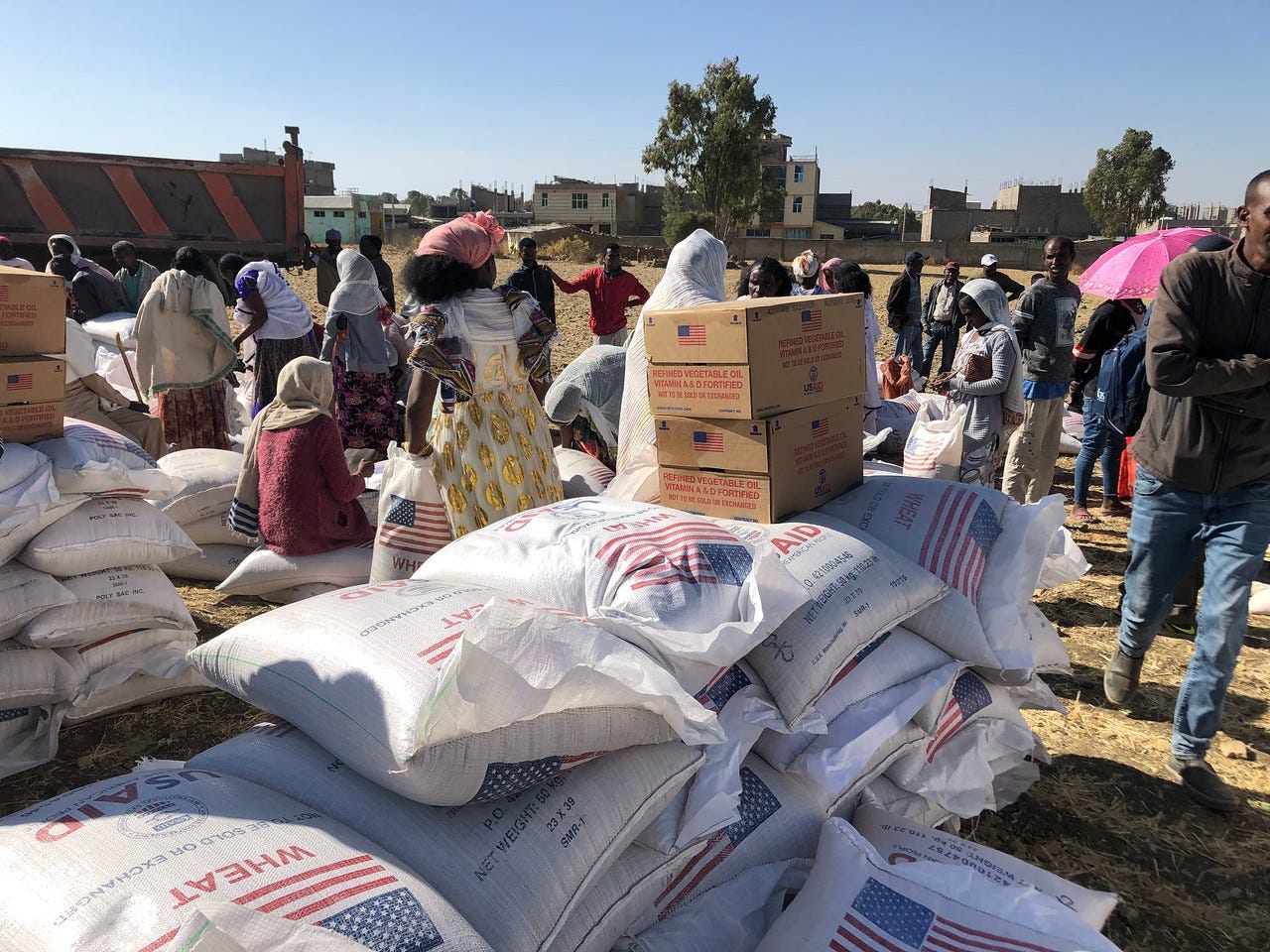

The study’s authors theorise that the effects of the US aid cuts occurred because the economic opportunity costs of violence dropped more rapidly than the aid over which groups were competing (in part because aid included capital and infrastructure that didn’t immediately go away). The impacts on individuals, including beneficiaries and staff, was sudden, unexpected, and in many cases life altering. And as the study reveals, the aid cuts increased the likelihood of unrest and violence. Interestingly if unsurprisingly, the study found that the impacts of the aid cuts were mitigated in countries with stronger, more inclusive political institutions.
Why it matters: Aid is up to 40 times more volatile than government revenue. Aid revenues are the most significant source of external fluctuations after commodity prices. They account for 25% of all external shocks, ahead of natural disasters, humanitarian crises, changes in GDP, and fluctuations in international interest rates. And while the study’s authors caution that their findings cannot necessarily be applied to the more gradual (and less severe, in terms of absolute amounts) aid cuts by the likes of France, Germany, the UK and other donors countries, they present a cautionary tale about a previously underappreciated aspect of aid cuts.
2. It’s far cheaper to prevent conflict than resolve it. ONE Data’s analysis found that every $1 spent on activities that spur economic growth and political stability can avert spending of up to $103 on a future conflict. That means that preventing conflict is 100 times cheaper than responding to it.
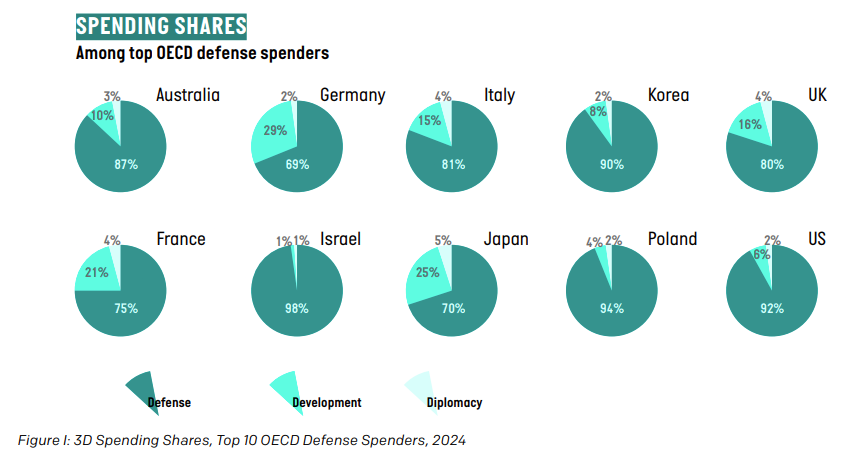
Yet the top 10 OECD defense spenders allocate $7 to defense for every $1 spent on development and diplomacy, combined. Overall, more than 85% of their security-relevant spending is devoted to defense. That leaves less than 15% for the tools that help reduce fragility, manage shocks, and sustain political stability. Those 10 countries spent a combined $1.45 trillion on their militaries in 2024, up nearly 30% over the previous decade.
Why it matters: The US and other donor countries have labelled their aid cuts as cost-saving measures. The reality is that those cuts are actually costing them money in the long run due to higher security costs, weakened soft power, and lost jobs. International aid is deeply intertwined with donor countries’ agricultural markets, and helps provide buffers against biological and terror threats. TL;DR: Aid done effectively isn’t just about doing good. It’s a smart investment that yields economic and security returns both abroad and at home.
FROM THE ONE TEAM:
ONE Data provided support for a new modelling study submitted to the Lancet Medical Journal by the Barcelona Institute for Global Health that estimates that recent and projected aid cuts by 11 European donors could be associated with over 12 million avoidable deaths by 2030.
ONE Data partnered with the Future of Development Cooperation Coalition to produce The Development Balance Sheet.
ONE Data presented on the effective use of open data alongside Google at the Global Data Festival in Nairobi this week.
IN THE QUEUE:
As fertiliser shortage bites, Africa must look to its own soil.
Africa must define Africa’s response to Ebola.
Development finance faces a trillion-dollar traffic jam.
ONE Data provides cutting edge data, tools, and analysis so that we can fight together for a more just world. See for yourself.