

Food security gets mixed reviews
Food insecurity is going down, but the cost of eating healthy is going up. That’s the too-long-didn’t-read summary of the UN’s annual food security report, published this week. But that masks a lot of important nuances about who has access to healthy food and where they live.
So this week, we dig into the numbers.
— Joe Kraus, Senior Policy Director, ONE Data
3 things to know
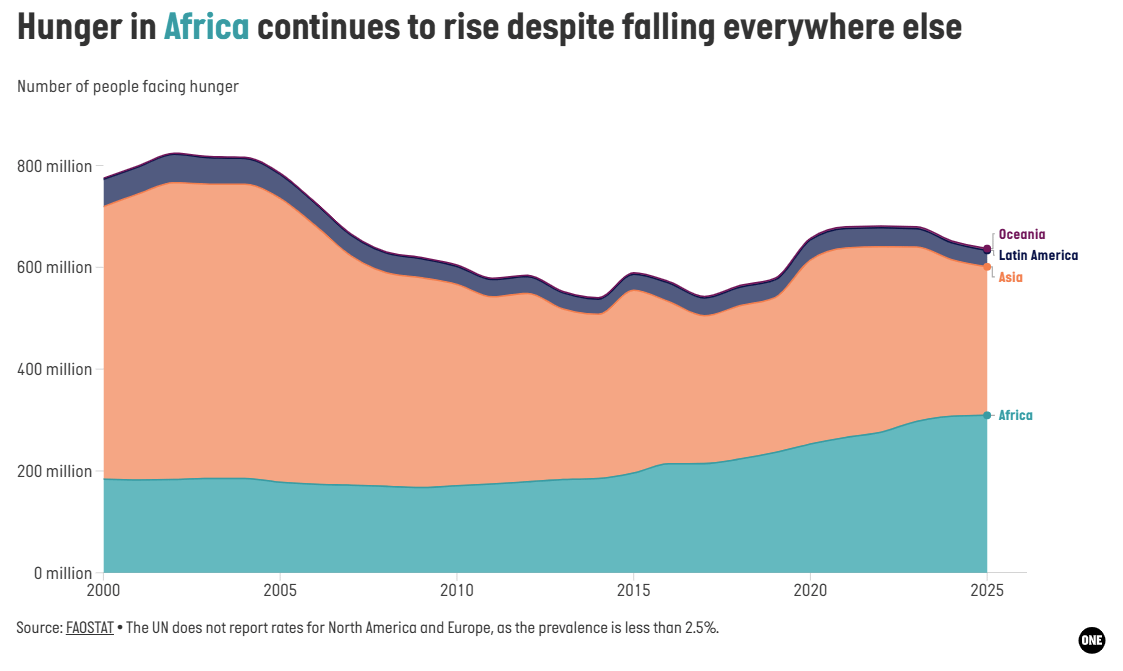
1. Food security is improving globally. 14 million fewer people faced hunger last year than in 2024 (and 43 million fewer than in 2022). That’s the good news. The bad news is that progress is uneven. Asia and Latin America have seen steady improvements. Yet in Africa, 309 million people—one in every five!—experienced hunger in 2025.
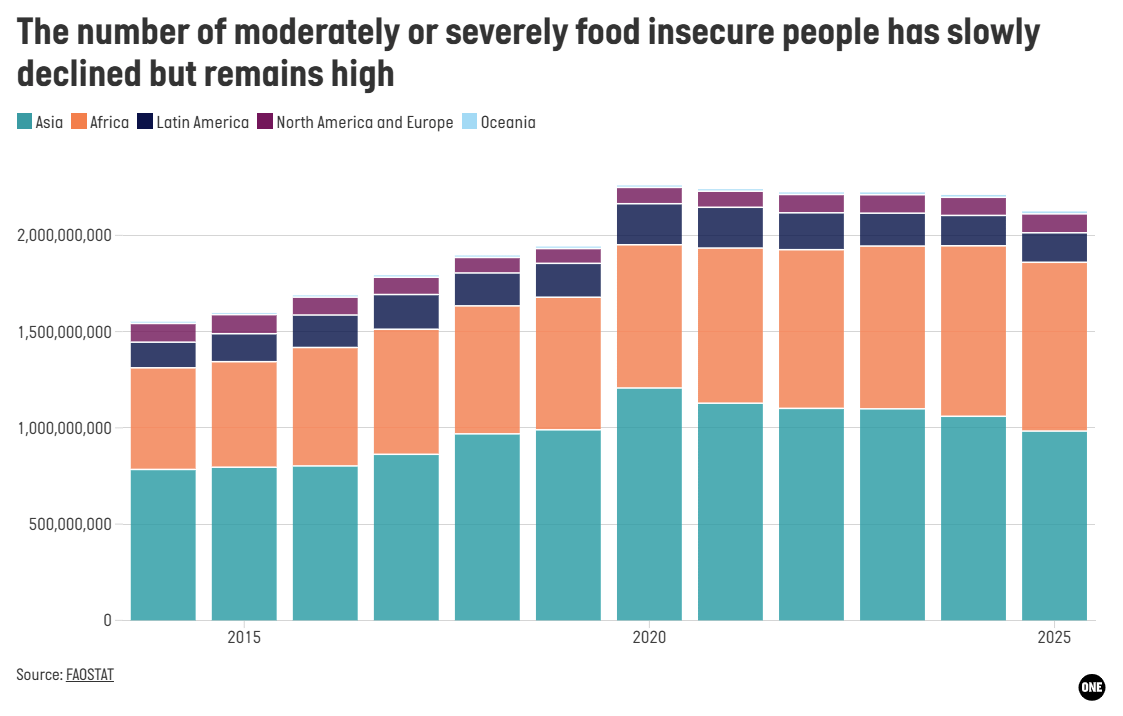
The same pattern holds true for broader measures of food access. Moderate or severe levels of food insecurity—defined as being forced to compromise quality or quantity of food—affected 25.8% of the global population last year. That’s down from 28.7% in 2020, representing 135 million fewer people. Yet the regional differences are stark, and once again Africa lags the rest of the world. Well over half (56.6%) of Africa’s population faced moderate or severe insecurity in 2025.
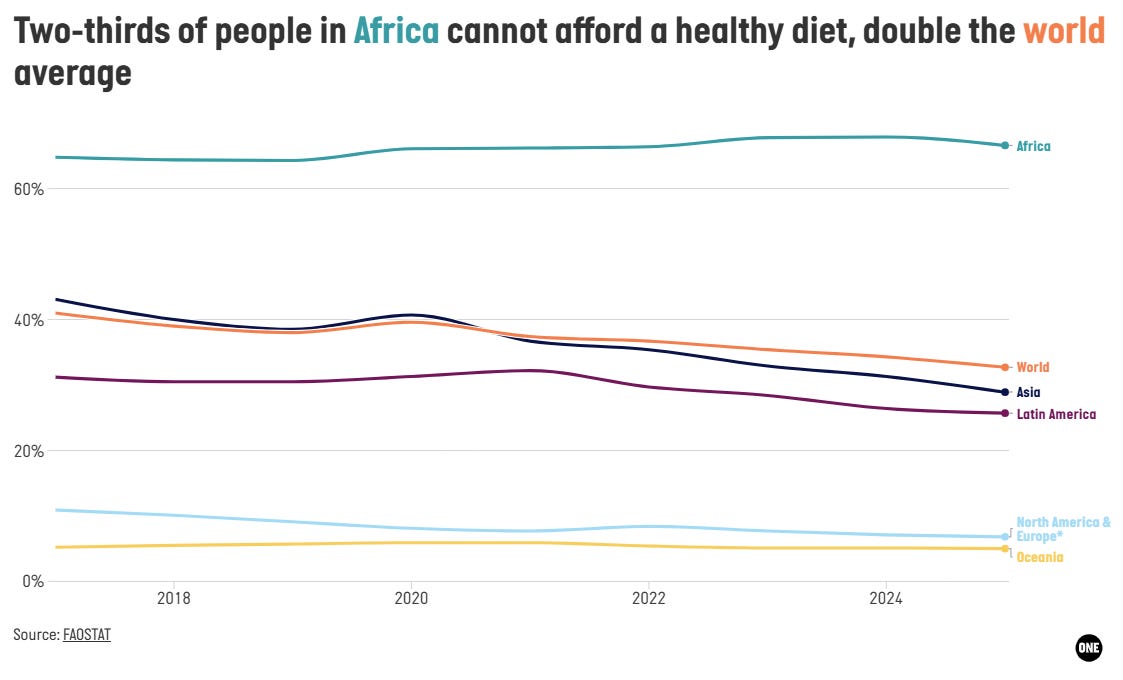
2. Eating healthy has become more expensive. The average global cost of a healthy diet has increased by 24% since 2021 and by 45% since 2017. Rising wages seem to have offset this overall, since 280 million fewer people were unable to afford a healthy diet in 2025 compared to 2021.
But that progress still leaves nearly 2.7 billion people struggling to eat a healthy diet, and once again masks regional disparities. Two-thirds of Africa’s population couldn’t afford to eat healthy last year, more than double the levels in Asia and Latin America. And importantly, those numbers don’t include the impacts of the Iran war on food prices and availability. The UN predicts that geopolitical tensions—including the Iran war—could leave an additional 9-18 million people facing hunger.
3. Food insecurity is coming to a store near you. Obviously, the global decline in food insecurity is very good news. But it’s worth taking a beat to highlight something not considered in the UN’s numbers: the impacts of climate change. The downward trend in food insecurity may very well stall or even reverse as climate change’s impacts become more ubiquitous.
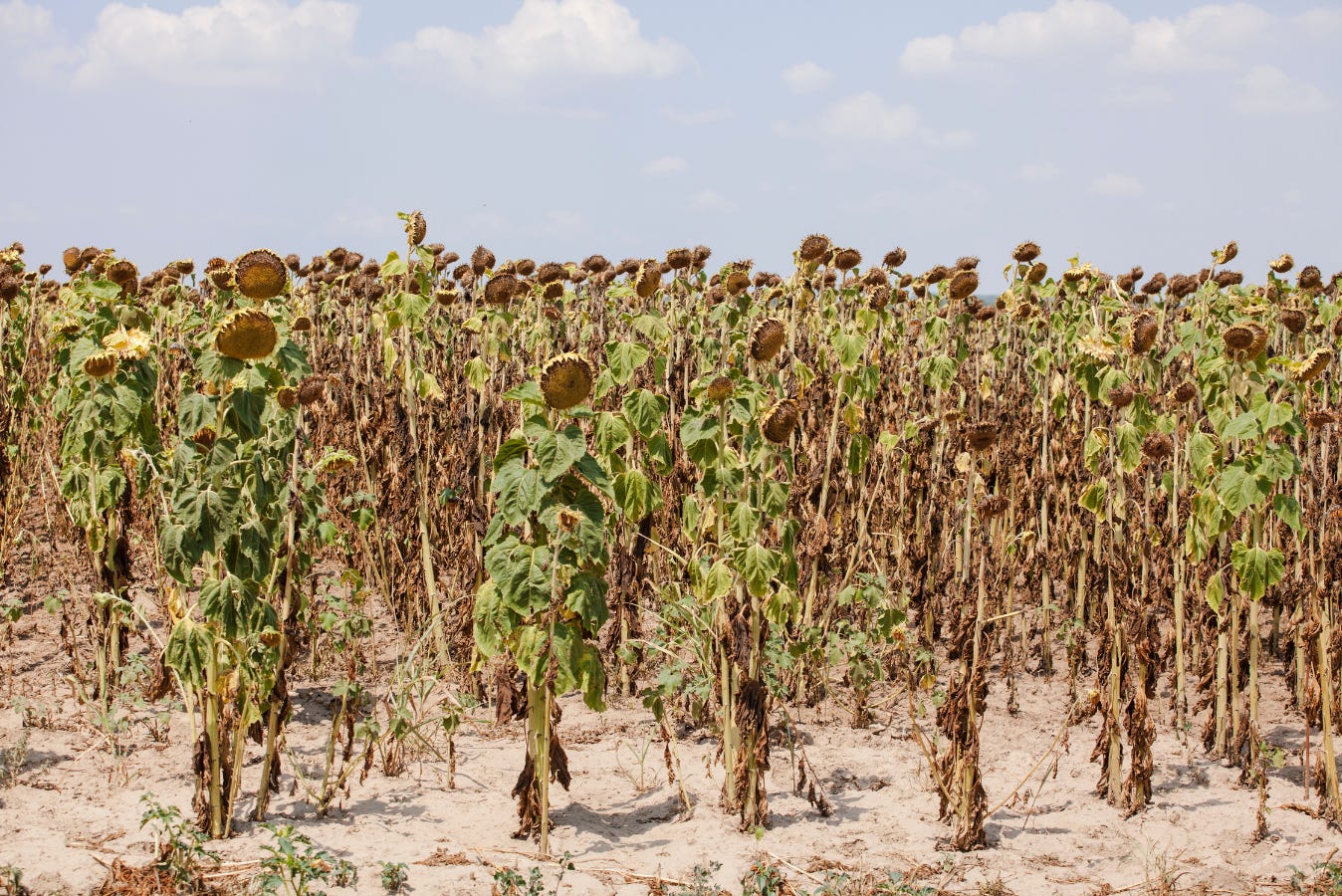
Take droughts, for instance. Our analyses have found that the number of people impacted by droughts will increase 400% by 2050, and that droughts in Africa have tripled in the past 50 years. Crop-damaging heat will increasingly jeopardise food crops barring major policy and agricultural shifts. Recent heatwaves across Europe destroyed an estimated 9 million tonnes of crops valued at €2 billion. That, and other climate-related events, will result in less food and higher prices, a double whammy that will impact lives regardless of geography.
FROM THE ONE TEAM:
David McNair on how advocates can build movements that win, and on how small countries can have a big impact by promoting “dignified development.”
Adrian Lovett penned a letter to new UK Prime Minister Andy Burnham, urging him to bolster Britain’s international leadership.
ICYMI: A seismic shift in where people live and work.
IN THE QUEUE:
Africa’s “idle trillions” are already hard at work.
The banality of professional excellence.
ONE Data provides cutting edge data, tools, and analysis so that we can fight together for a more just world. See for yourself.