

During a heatwave in 2022, people in India began seeing dead birds fall from the sky. That’s a discomfiting thing to witness. And an ominous sign. Warnings about the dangers of rising heat due to climate change had escaped the pages of sci-fi fiction and landed squarely in the real world.
A Climate Impact Lab report published this week puts into perspective the inequality of global warming. Heat deaths are expected to increase dramatically in certain parts of the world, offset in part by fewer cold-related deaths in other places. Below, we look at the biggest losers of a warming planet (you’ll never guess who… 😳).
— Joe Kraus, Senior Director, ONE Data
BUT FIRST, A QUIZ
We’re quietly cooking up the next version of ONE Data—and you’re a part of it.
Got 3 minutes? Fill out this short survey and tell us what works, what doesn’t, and what you wish existed. If this is your first time hearing that we have a data platform, even better—we want to hear from you, too.
As a thank you, respondents will be invited to:
Test new data features before anyone else
Join a small working group shaping ONE Data
Attend off-the-record, closed-door sessions with our team and other major leaders in the development community
3 things to know
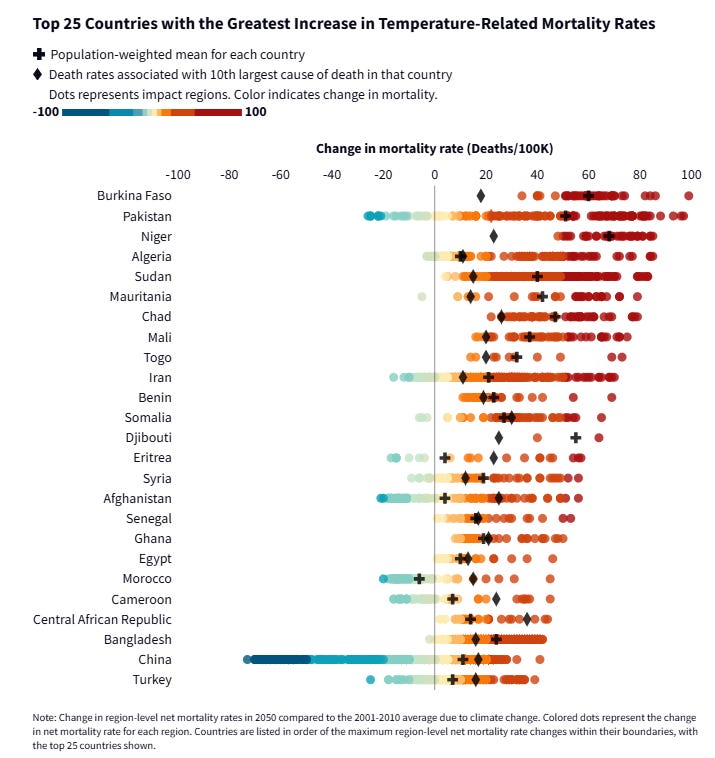
1. Where you live determines how likely you are to die from climate change. Lower-income countries stand to lose 10 times more people to deaths from high temperatures than rich countries. Hotter regions, including North Africa, the Middle East, and Southwest Asia, will be hit hardest. Parts of Algeria, Burkina Faso, Niger, Pakistan, and Sudan are expected to see increases exceeding 80 deaths per 100,000 people. That’s on par with the rate of malaria deaths in places like Nigeria and Sierra Leone today.
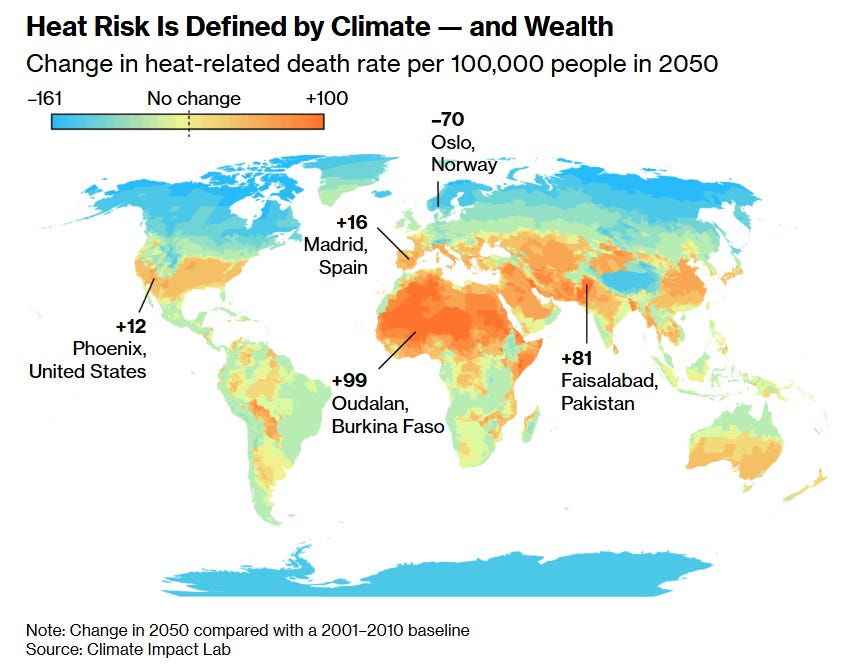
Why it matters: Add climate change to the many ways in which people in high- and lower-income countries experience the world differently. Inequality is a key factor. The East African country of Djibouti is projected to see an increase in heat-related deaths double that of oil-rich Kuwait, despite their similar climate.
2. Without economic growth, there would be seven times more temperature-related deaths globally. That’s roughly equivalent to global deaths from suicide. That points to the importance of sustained economic growth and development. Because without both, the fatal impact of heatwaves will be far greater. And they’ll be centred on the populations already struggling the most to get by: 16 of the 20 countries facing the most new heat-related deaths are lower income.
Why it matters: Lower-income countries are in desperate need of climate finance to help them address the climate change caused by rich countries. Yet rich countries have dragged their feet and offered plentiful excuses and insufficient finance. At the same time, they’ve designed a climate finance reporting system that enables them to claim more in climate finance than they actually contribute.
3. People in lower-income countries are being disproportionately impacted by a climate crisis they didn’t create. Having neither caused nor benefited from climate change, they now bear the brunt of its impacts. Meanwhile, the US and China have caused an estimated $10 trillion and $9 trillion in climate damages since 1990.
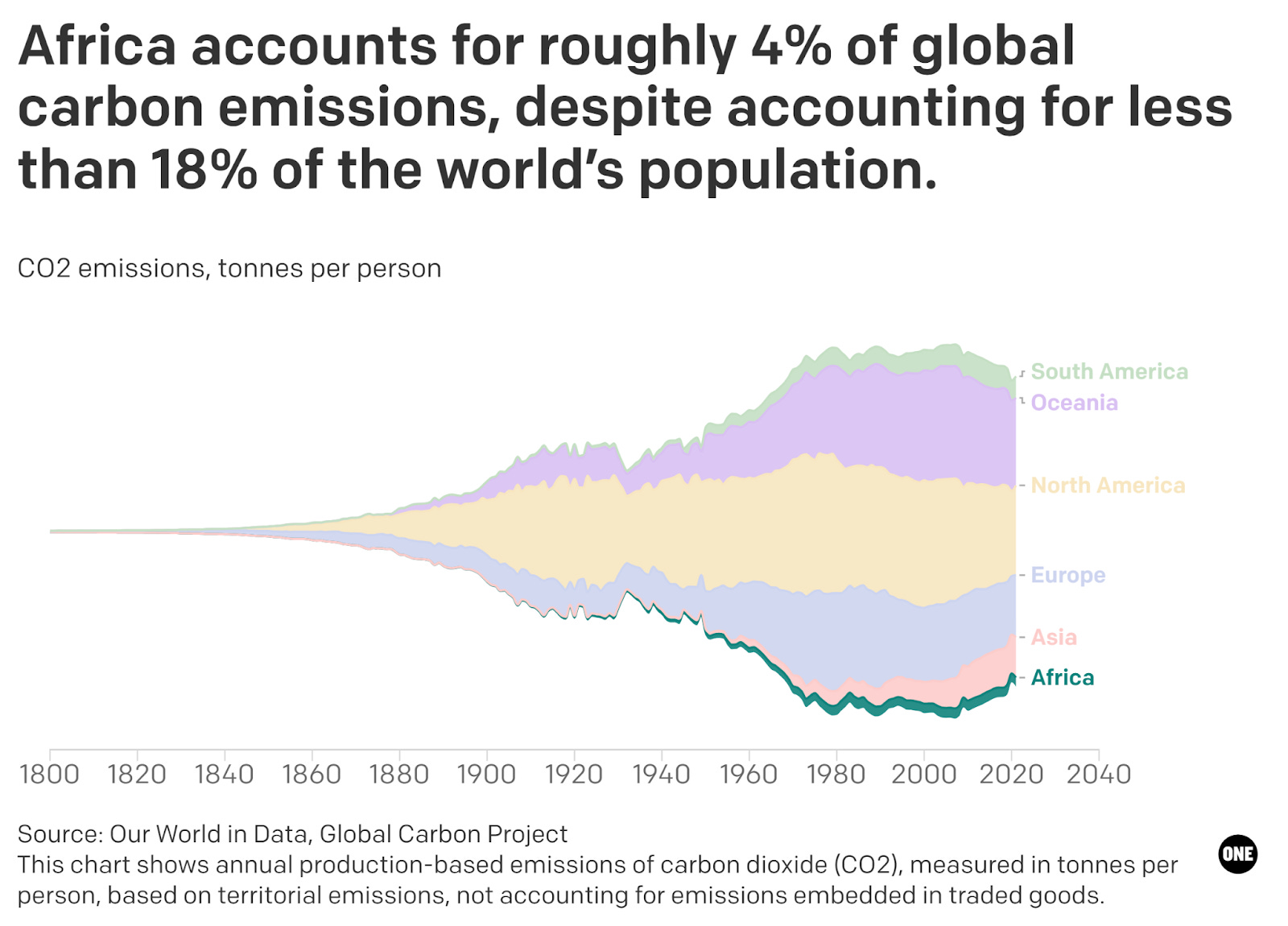
Why it matters: The injustices of colonialism and imperialism continue to compound. Today’s industrialised countries burned massive amounts of greenhouse gas-emitting fossil fuels to catalyse their economic growth. A lot of that fossil fuel was extracted from lower-income countries. Now those countries are being told (often by people in rich countries) to reduce their use of fossil fuels to protect the planet at the same time they are trying to industrialise and grow. It’s a dark irony not lost on populations tired of being told to “do as we say, not as we do” by Western powers.
FROM THE ONE TEAM:
Climate finance reporting is a mess. Here’s how to fix it.
David McNair offers five observations on how the world is being changed during a volatile time.
IN THE QUEUE:
The Iran war is pushing consumers to break up with fossil fuels.
Why debt restructuring may be the least bad option for Senegal.
Turning polycrisis into polytunity (and why “polycrisis” may be a Western-centric term).
ONE Data provides cutting edge data, tools, and analysis so that we can fight together for a more just world. See for yourself.