

Déjà Vu
Once again, billions of people find themselves impacted by a war of choice they had no say over. Four years ago, Russia’s invasion of Ukraine upended global supply chains, causing oil, food, and fertiliser prices to skyrocket and leading to higher interest rates. That had impacts far beyond Ukraine (as we noted at the time).
The US-Israel war with Iran is evolving quickly, so its fallout remains uncertain. But should it continue for several weeks or months, the consequences for developing countries are predictable, and likely dire, as we outline below.
— Joe Kraus, Senior Policy Director at ONE Data
4 things to know
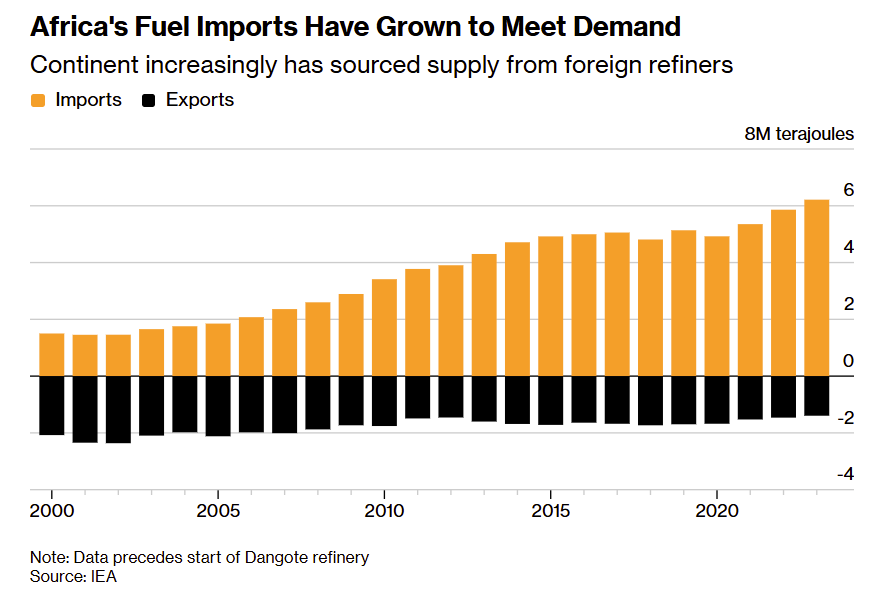
1. Oil price hikes will yield some winners and a lot of losers. Oil producing countries—think Angola, Brazil, Guyana, Nigeria, Malaysia, and Mexico—stand to benefit from higher oil prices. Oil importing countries, on the other hand, are poised for tough times. Some African countries only carry enough oil to cover a few days’ worth of demand; many others carry less than three weeks worth.
Source: Bloomberg
Why it matters: Angola and Nigeria planned for an average oil price of $61 and $65 per barrel in their 2026 budgets. Higher prices would represent a revenue windfall, especially if prices stay elevated for months. Many oil rich countries, however—especially in sub-Saharan Africa—lack sufficient domestic refining capabilities to meet their growing needs. So while they export oil and gas, they also import refined fuels. That means higher prices cut both ways. The budgets of non-oil producing developing countries would be hit hardest by higher prices, forcing them to take on more debt or cut spending (read: cut public services). Both options are bad, and could prove destabilising.

Source: Bloomberg
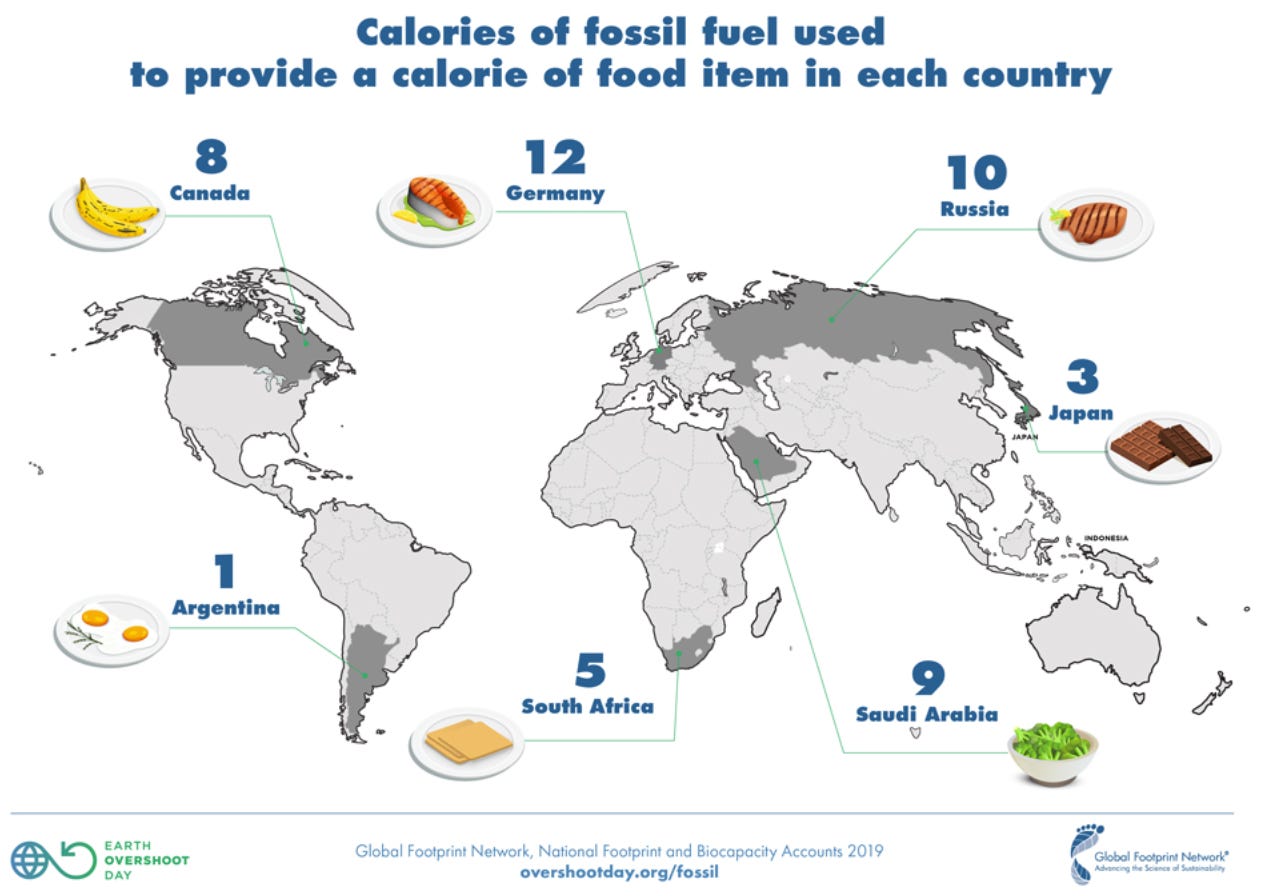
2. Say hello to higher food prices. Oil and gas are used to help grow or transport almost everything we eat. Natural gas is used to make nitrogen fertilisers like urea. About one-third of the global fertiliser trade flows through the Strait of Hormuz, which is effectively closed. That’s caused a rapid spike in fertiliser prices, with more on the horizon. The average price of urea is up nearly 30% since the war’s outbreak. Nitrogen prices could double and phosphate prices may increase 50% if the war doesn’t end quickly.
Source: Global Footprint Network
Why it matters: Higher fertiliser prices can quickly lead to higher food prices. The World Bank estimates that every 1% increase in fertiliser prices can push up global food prices by 0.45%. That puts the squeeze on both farmers and consumers. High oil and gas prices played a key role the three times this century (2008, 2011, 2022) when food prices spiked. And higher food prices would come at a time when more than 300 million people already face acute hunger, aid budgets are shrinking, and existing humanitarian needs are underfunded.
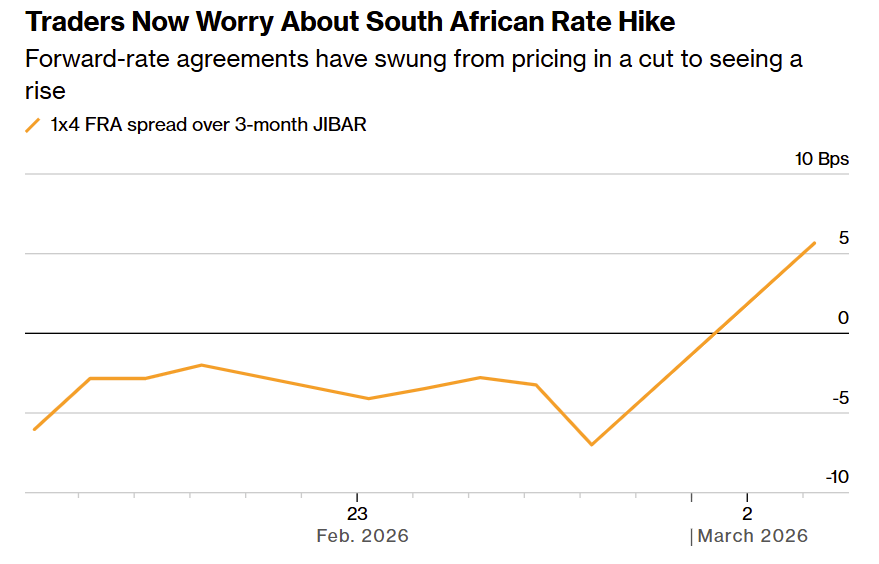
3. Stronger dollar, rising interest rates, precarious debt. Price increases on oil, food, and other products could help strengthen the US dollar and lead to weaker local currencies and rising inflation. That would put further pressure on developing countries’ trade balances and likely force governments to hike interest rates. That dynamic is already on display in South Africa, where traders spooked by the war in Iran quickly reversed expectations of an interest rate cut.
Source: Bloomberg
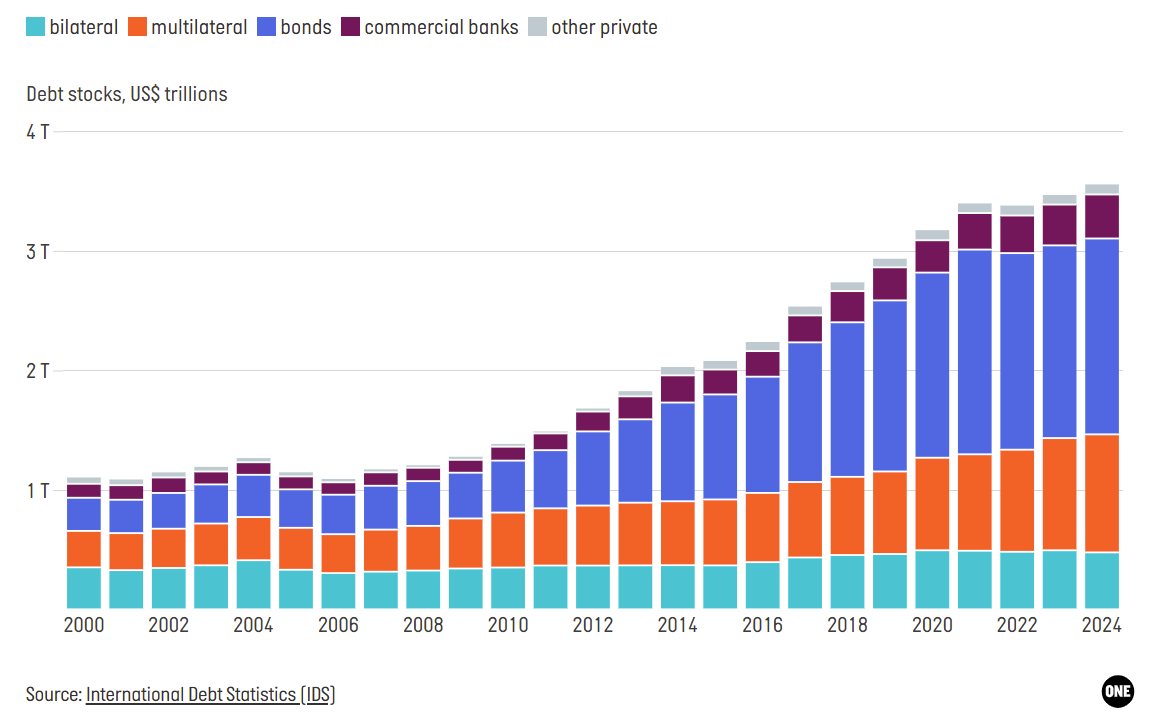
Why it matters: Developing countries will pay roughly $450 billion to service $3.5 trillion in debt. 33 of those countries are already in or at high risk of debt distress. Higher interest rates—exacerbated by higher import costs and weaker currencies—would put government budgets in a serious bind. If the war and its aftershocks last for an extended period, some countries may need to restructure their debt or risk defaulting. The lack of an effective international debt restructuring mechanism increases the risk of the latter.
Developing countries’ debt stocks
Explore an interactive version of the chart
4. Significant losses of remittances from migrant workers. Foreign residents account for the majority of the population in several Middle East countries, including nearly 90% in Qatar and the UAE. Most of those workers send money home to support their families. The war has caused a number of Gulf countries to reduce or pause activities, including oil production and transportation. Should the war drag on, the loss of remittances will be felt back home by people who depend on them and are being squeezed by higher costs of living.
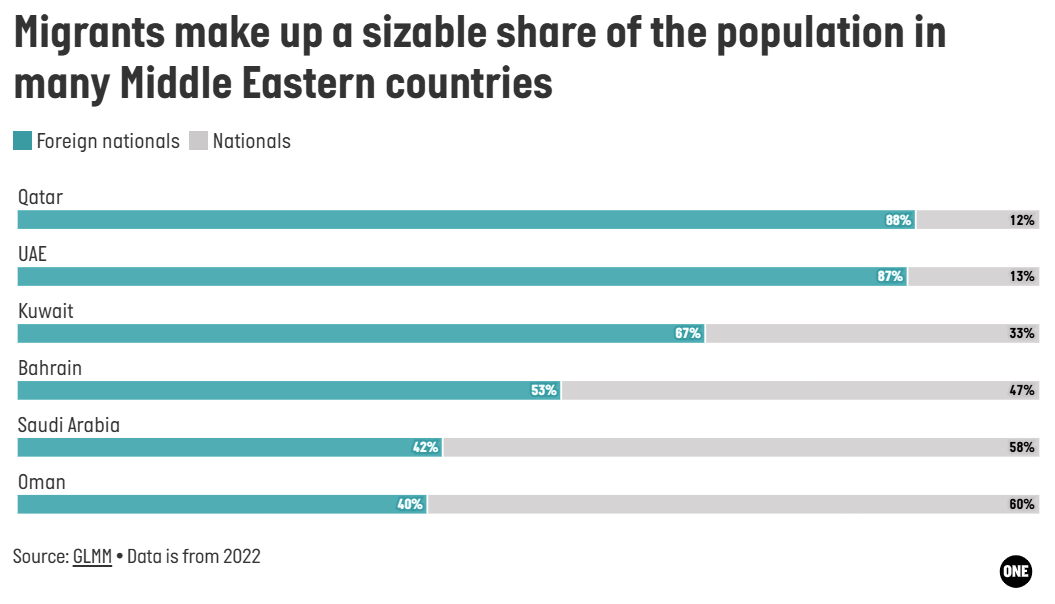
Explore an interactive version of the chart
Why it matters: The impact could be consequential. Millions of people in Africa and Asia are highly reliant on income generated in the Middle East, a critical pipeline now threatened by the war. Global remittances to developing countries exceed foreign direct investment and development aid, combined. The Middle East accounts for 15-20% of total remittances to developing countries; in recent years, that’s been $110-120 billion annually. That makes it one of the world’s largest remittance corridors. India receives over one-third of its $135 billion in remittances from the Middle East. Over half of the remittances received in Bangladesh and Pakistan originated in Gulf countries.
FROM THE ONE TEAM:
Elise Legault on Canada’s open goal with Africa.
Adrian Lovett spoke to The Independent about the UK’s questionable use of an already slimmed down aid budget.
HELP WANTED:
Data Engineer: Help build the data infrastructure that powers ONE Data’s products and platforms.
Senior Product Manager: Lead the strategy, development, and ongoing improvement of ONE Data’s digital products and platforms.
IN THE QUEUE:
How the war in Iran could ravage global food security.
Migrant workers are disproportionately impacted by war in Iran.
The little-known commodity fueling Sudan’s civil war.
ONE Data provides cutting edge data, tools, and analysis so that we can fight together for a more just world. See for yourself.