

The least worst
The ubiquity of mobile phones highlights one of humanity’s glaring contradictions. From the comforts of my middle-class home in the US, I can easily call or text my friend Stephen in Uganda. He and his family live in a small village in the rolling hills of eastern Uganda. Their home, made of sticks and clay, must be rebuilt every few years, a victim of weather. They survive largely on the food they grow, the occasional odd job, and support from friends.
So while Stephen and I can easily communicate thanks to cutting edge technology, we live worlds apart in terms of quality of life and security. I once spent a summer in Stephen’s village, and quickly learned that the burials of young children occur with alarming frequency. Malaria is endemic, the local hospital rudimentary, and most residents can’t afford medicines or treatment.
But I’ve also witnessed positive outcomes. In rural Kenya, I met a vibrant woman living with HIV. Both she and her two young children were alive thanks to medicines provided by the Global Fund.
Children in Uganda are 7.5 times less likely to reach their fifth birthdays than children in the US. A Kenyan child is 6 times less likely. That disparity is both far too high, and lower than it’s ever been. That’s the focus of our just-released analysis on under-five mortality, which we preview below.
— Joe Kraus, Senior Policy Director, ONE Data
3 things to know
1. The odds of a child celebrating their fifth birthday are the best they’ve ever been. In 1950, nearly one child in four died before their fifth birthday. By 2024, the rate had declined to one in 27. Ninety-six percent of all children now survive past age five. That’s an astounding—and undertold—success story.
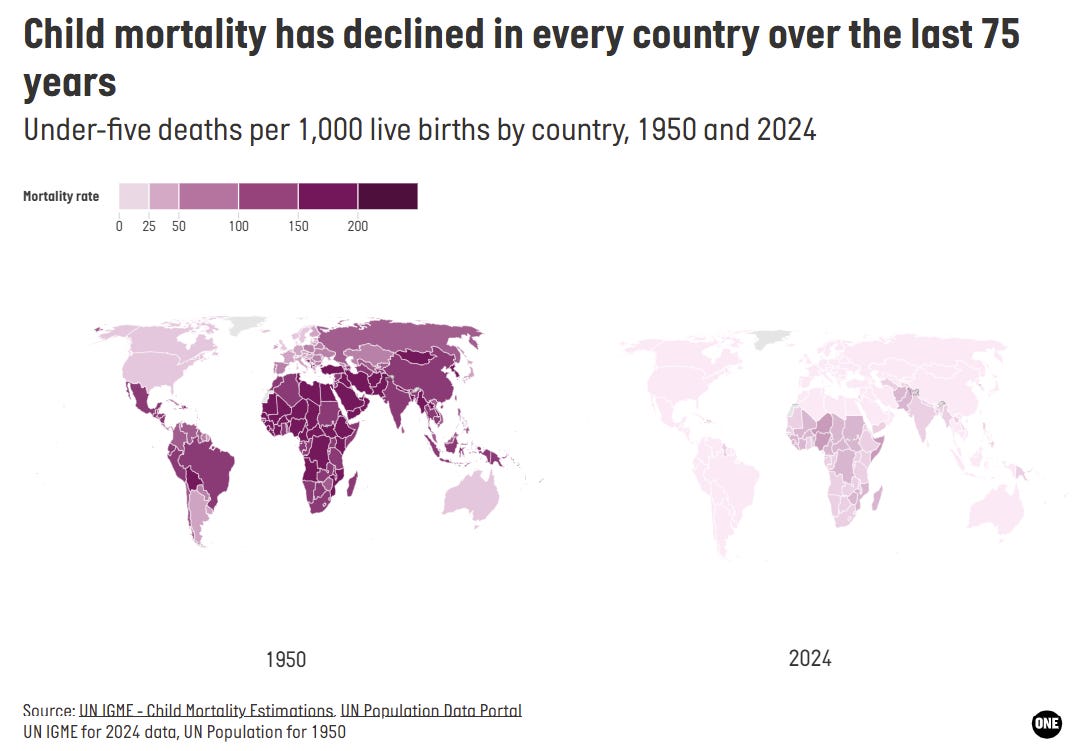
That progress didn’t happen by chance.
It resulted from improvements in science, sanitation, and economic growth. A trained pair of hands assisting at births. Clean water. Antibiotics. Enough food. Vaccines, which on their own have saved an estimated 154 million lives in fifty years.
Reducing child mortality is perhaps the world’s greatest achievement, and it took two centuries of deliberate work.
Then, around 2015, progress slowed sharply.
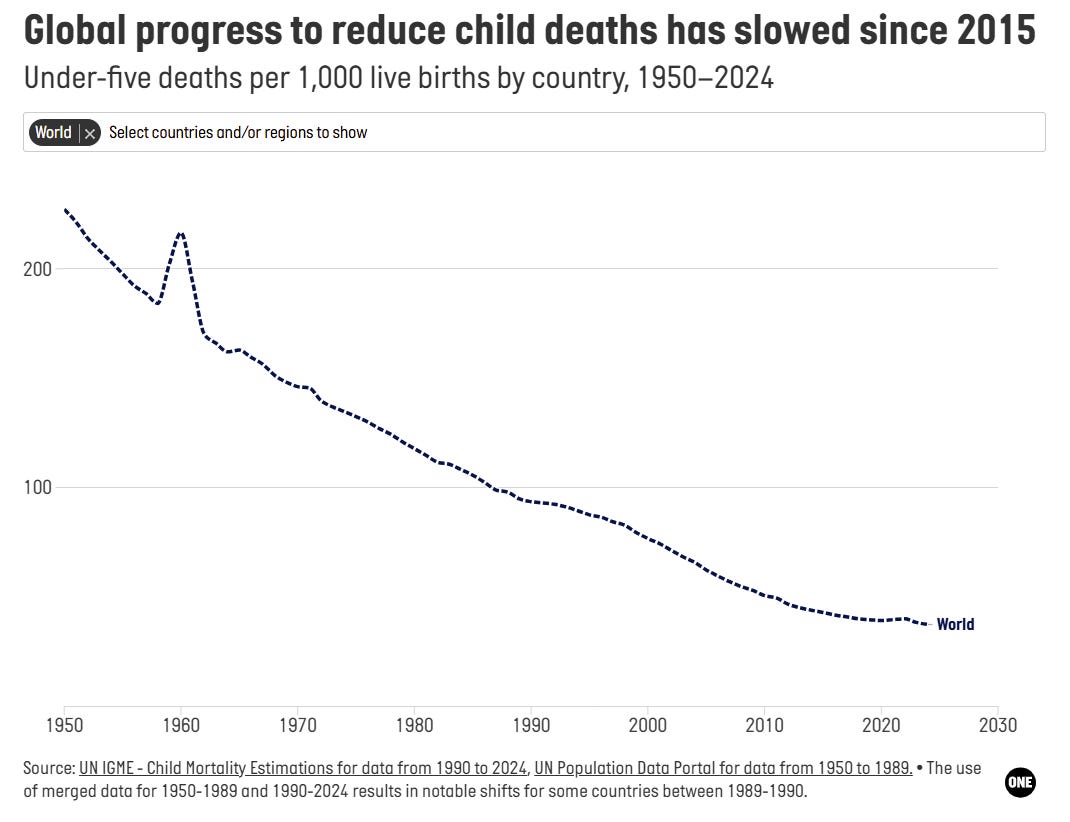
The latest projections, which factor in deep cuts to health aid, show the decline barely continuing and the goal of ending preventable child deaths by 2030 slipping out of reach.
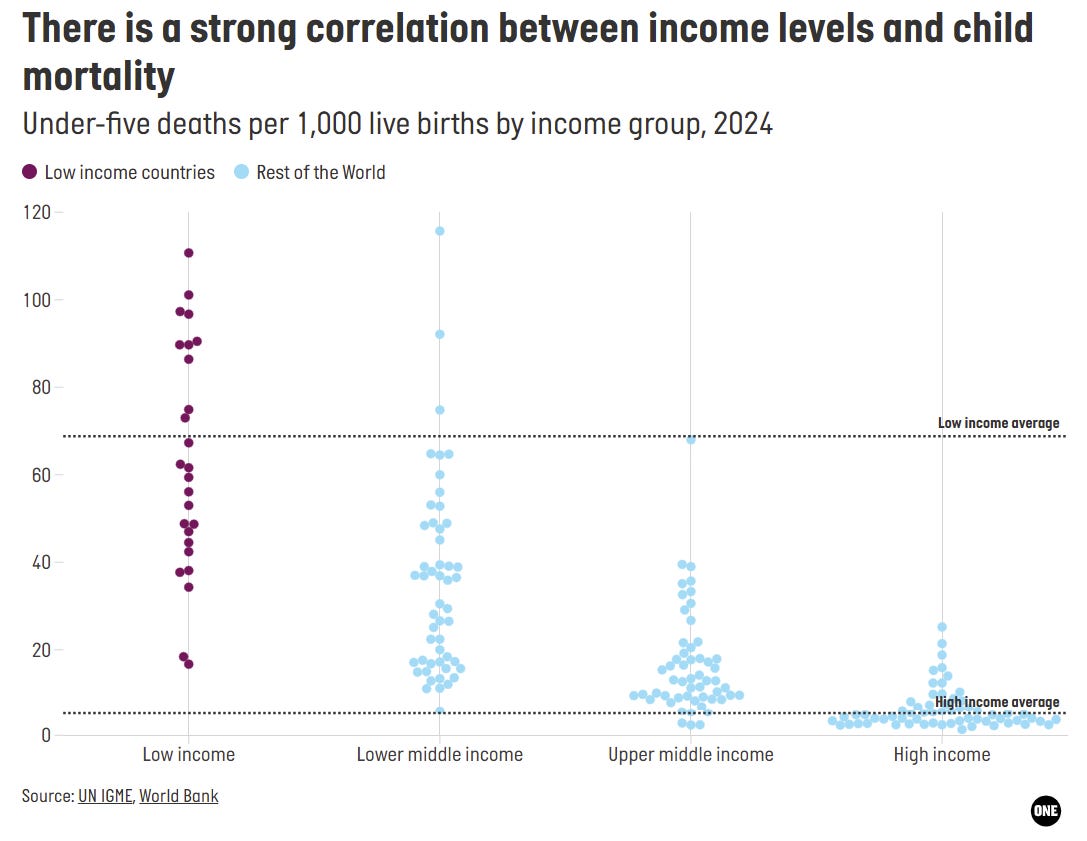
2. A child’s odds of reaching five still depend on where they are born. There’s a strong correlation between income levels and child mortality. A boy in Norway and a boy in Chad born at the same moment are born a century apart in survival terms. Norway is among the safest places in the world to be born: about 1 in 400 children die before their fifth birthday. In Chad, it’s about one child in 10, roughly the odds a Norwegian child faced a century ago.
Most of what kills children in the poorest countries can be prevented or treated. That includes infectious diseases like malaria, lower-respiratory infections, diarrhea, and measles. In addition, hunger plays a contributing role in making children weak and susceptible to disease.
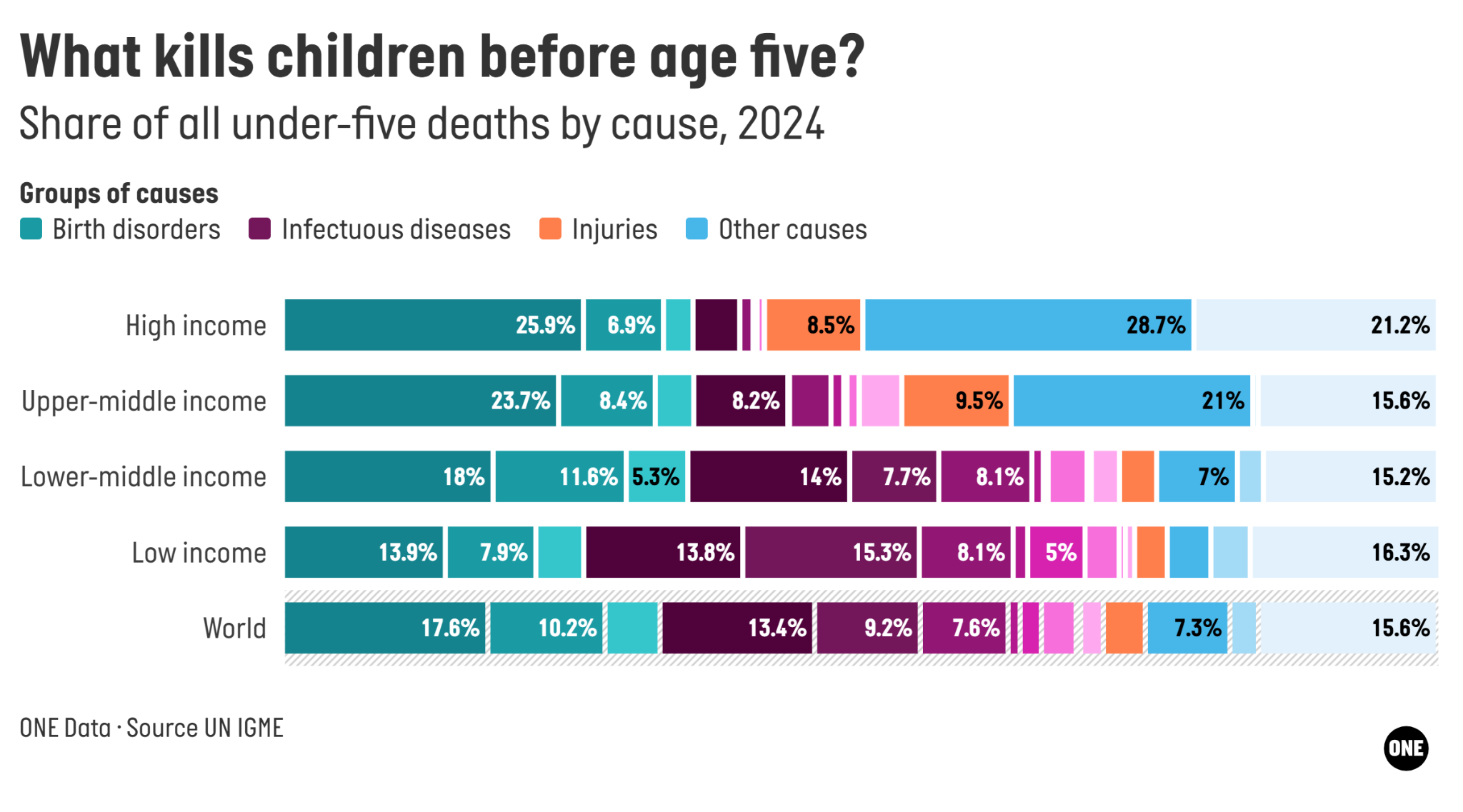
None of these causes are inevitable. For each, the odds can be improved to give children everywhere an equal chance to survive and thrive. If the adequate political will and resources exist.
3. Solutions exist, but aren’t always accessible to those that need them most.
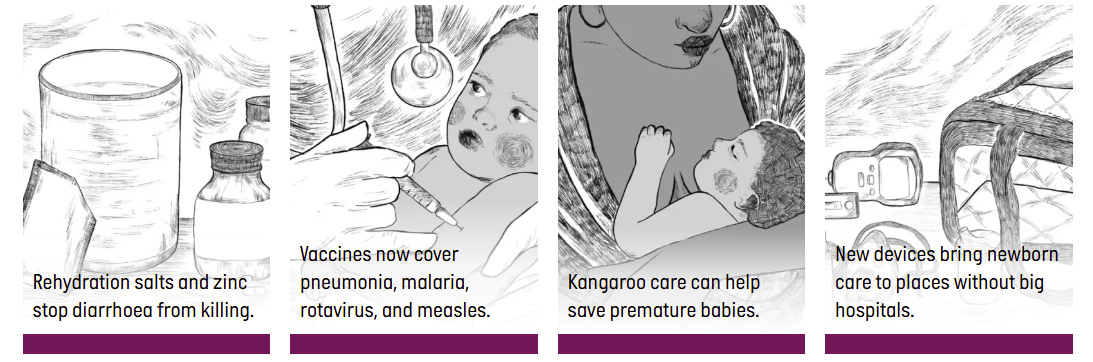
Some existing solutions can go a long way and cost little. Vaccines prevent pneumonia, malaria, measles, and rotavirus. Diarrhoea can be countered with rehydration salts and zinc that cost a few cents. Inexpensive, yet rugged devices are being built for places without big hospitals.
The bigger challenges are systemic. Inadequate public financing for healthcare. High debt service payments that eat into government spending on social services. The average person in the poorest countries spends more out of their own pocket on healthcare than their governments or external donors.
Yet there are examples of progress that highlight what’s possible. Rwanda and Ethiopia, for instance, have both invested heavily in community health workers over the past two decades. Perhaps not coincidentally, they have experienced some of the fastest declines in child deaths this century (80% and 68%). Emulating that success in other countries will require political vision and adequate financing.
FROM THE ONE TEAM:
Child mortality fell to the lowest point in human history. Then progress stalled.
ONE CEO Mark Green on how Africans are looking inward for solutions.
David McNair proposes a modular solution to addressing sovereign debt crises and asks “What is the purpose of development cooperation?”
IN THE QUEUE:
The death of aid was political suicide.
Africa’s new credit rating agency won’t be a game-changer.
ONE Data provides cutting edge data, tools, and analysis so that we can fight together for a more just world. See for yourself.