

Water, water, everywhere
The Great Salt Lake is a stunning place. On windless days, it turns into a mirror, reflecting the snow-capped mountains that ring the valley in which it sits. Antelope Island, the largest of many islands in the lake, is home to bison, bighorn sheep, and, of course, antelope. Millions of birds rely on the lake for food and habitat.
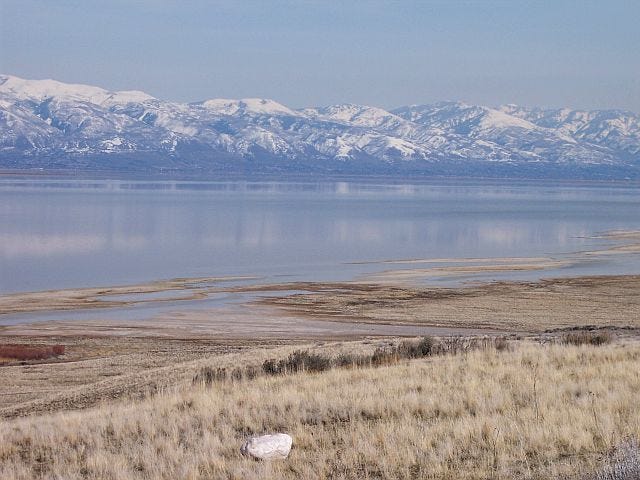
It also happens to be disappearing. It’s lost roughly half of its surface area relative to its long-term average.
It isn’t an isolated case. As we highlight in a new data story, it’s a pattern on repeat around the world.
The main cause: humans.
It’s an underreported story, with potentially big implications. So this week, we take a closer look at what’s going on.
— Joe Kraus, Senior Policy Director, ONE Data
3 things to know
1. More than half of the world’s largest lakes have shrunk in the past 30 years. Together, the world’s 2000 or so largest lakes have lost enough water over that period to fill 264 million Olympic-size swimming pools. Or to provide four years of drinking water to the entire global population each year. Between 2015 and 2023, the world’s freshwater lakes, rivers, and aquifers lost 47 litres (12 gallons) of water every day for every person on Earth.
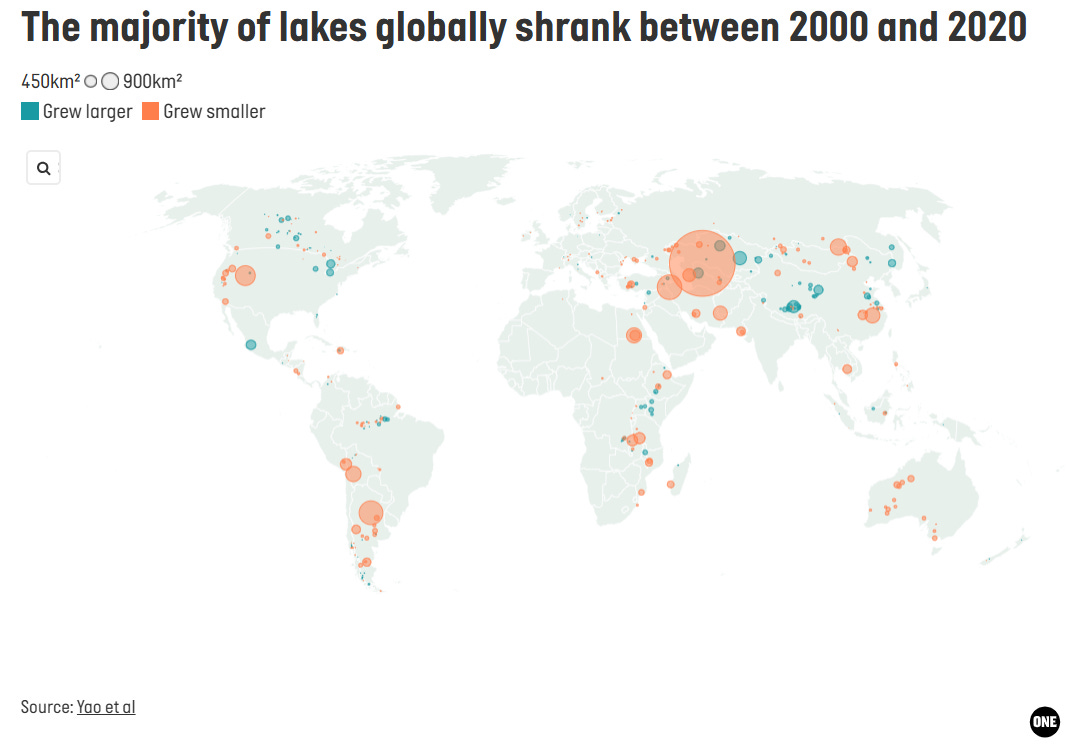
2. Humans are at fault. The causes of lake shrinkage vary, but there’s a theme: human activity. The most common causes are climate change and diverted water to power irrigation and industry.
Lakes around the world have warmed substantially in recent decades. The Great Salt Lake’s surface-water temperature increased by 1.1°C between 2001 and 2021. In Greece, surface temperatures across 18 lakes—including Lake Prespa—increased by an average of 0.43°C per decade between 1981 and 2020, consistent with broader evidence of rapid lake warming globally.
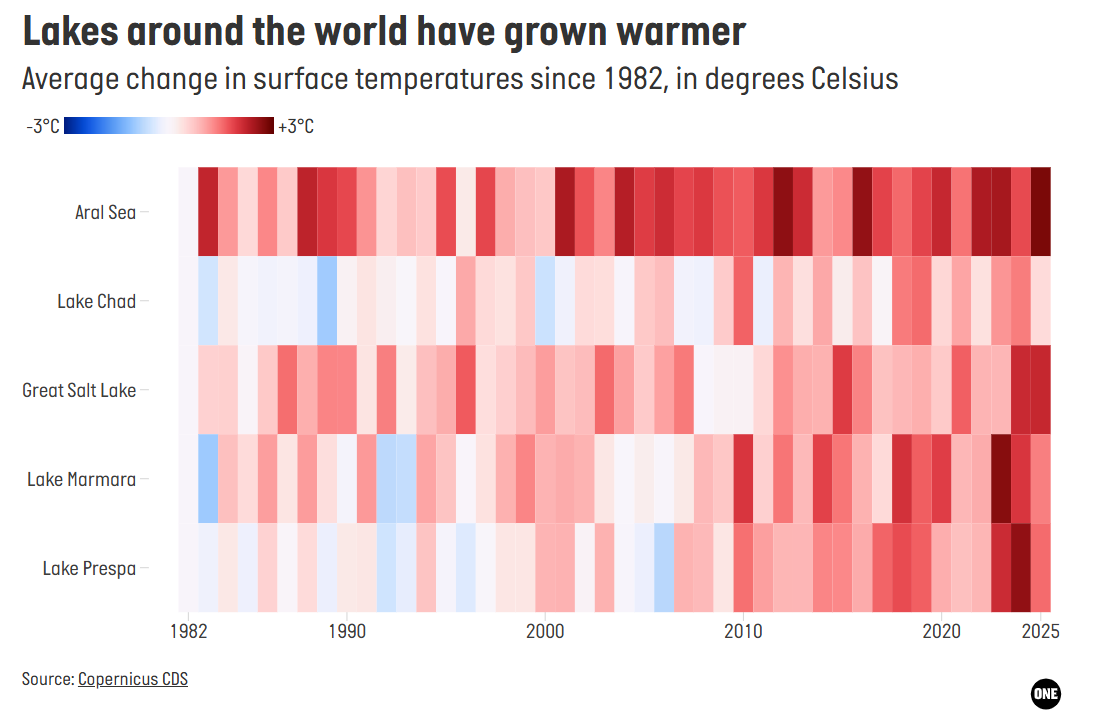
Global lake evaporation increased by roughly 2.1% per decade between 1985 and 2018, largely related to surface warming.
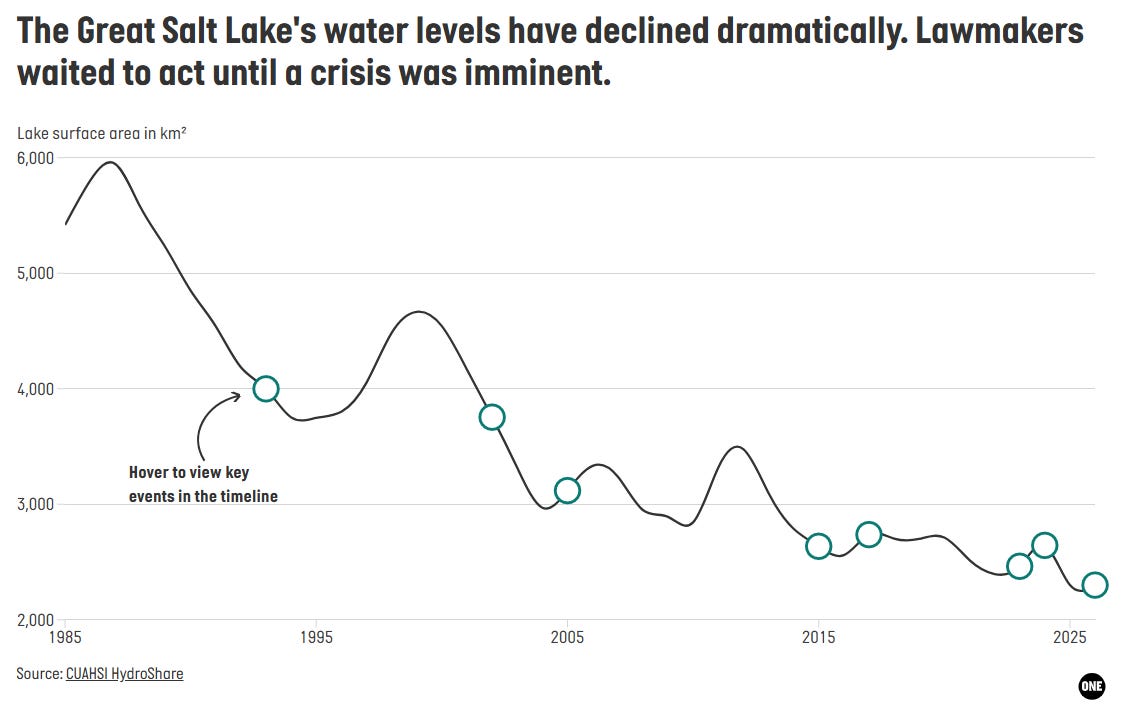
3. Early intervention is critical. Policymakers are failing to act soon enough. Early intervention seldom happens. The history of the Great Salt Lake is illustrative. For much of the last two centuries, most lake-related decisions were extractive: water rights granted, tributaries dammed, causeways built. In 2017, a group of water scientists published a study warning of the looming collapse of the Great Salt Lake. Little changed. In 2022, the lake reached its lowest recorded level in 175 years, garnering national attention. That triggered a flurry of government action, but the fate of the lake remains far from certain.

Institutional cooperation alone isn’t sufficient to fix the problem. Lake Prespa has been governed under a joint preservation agreement between Albania, Greece, and North Macedonia since 2000. Yet the lake is still in decline, with surface levels dropping three metres over the last decade. Long-term solutions will require tackling the root causes of lake decline, most notably climate change and excess water use.
FROM THE ONE TEAM:
The world’s lakes are disappearing.
The budget that decides Europe’s place in the world.
David McNair on what 167 UN General Assembly speeches say about the state of geopolitics.
IN THE QUEUE:
The African jobs most exposed to AI do not exist yet.
Geospatial AI stands to reshape how the world invests to end poverty.
10 things to read about how AI could shape development.
ONE Data provides cutting edge data, tools, and analysis so that we can fight together for a more just world. See for yourself.