

Rinse, repeat
As I was preparing to recap this year’s UN General Assembly (UNGA), I went back through my notes from last year’s UNGA. I was struck by how accurately they describe this year’s UNGA: same concerns, same distractions, same outcome (very little).
It brought to mind the aphorism by French critic Jean-Baptiste Alphonse Karraphorism: “Plus ça change, plus c’est la même chose.” (The more things change, the more they stay the same.”).
The concerns raised last and this year—what to do about AI, eroding trust in multilateral institutions, rising conflict, runaway climate change—are the right issues for the UN to discuss at this moment. But as has become the norm at high level international events, all the talk and hand wringing has resulted in little concrete progress at the scale needed to meaningfully address the problems at hand.
Nonetheless, there were a couple of interesting themes that (re)emerged at this year’s UNGA. They’re still important, still relevant, still unresolved. Next year’s UNGA agenda has already written itself.
— Joe Kraus, Senior Policy Director, ONE Data
2 things to know
1. AI is on a lot of people’s minds. AI was referenced in 42 of 100 leaders’ speeches on the first three days of the high level portion of UNGA. There were roughly 70 events this week on AI, and countless conversations about it. Yet participants this year seem just as unsure how—or even if—to manage it as at last year’s UNGA. Some tech leaders are calling for a slowdown, others are saying the solution is to speed up AI innovation.
One area of agreement: AI’s current rollout is on course to be wildly unrepresentative and exacerbate existing inequalities. A number of developing country leaders highlighted these concerns in their speeches at UNGA this week. So, too, did UN Deputy Secretary-General Amina Mohammed, who stated that “If [AI] technology is going to shape the human family in all its diversity, everyone must have a voice in shaping it…the measure of progress must be what it makes possible for the human being.”
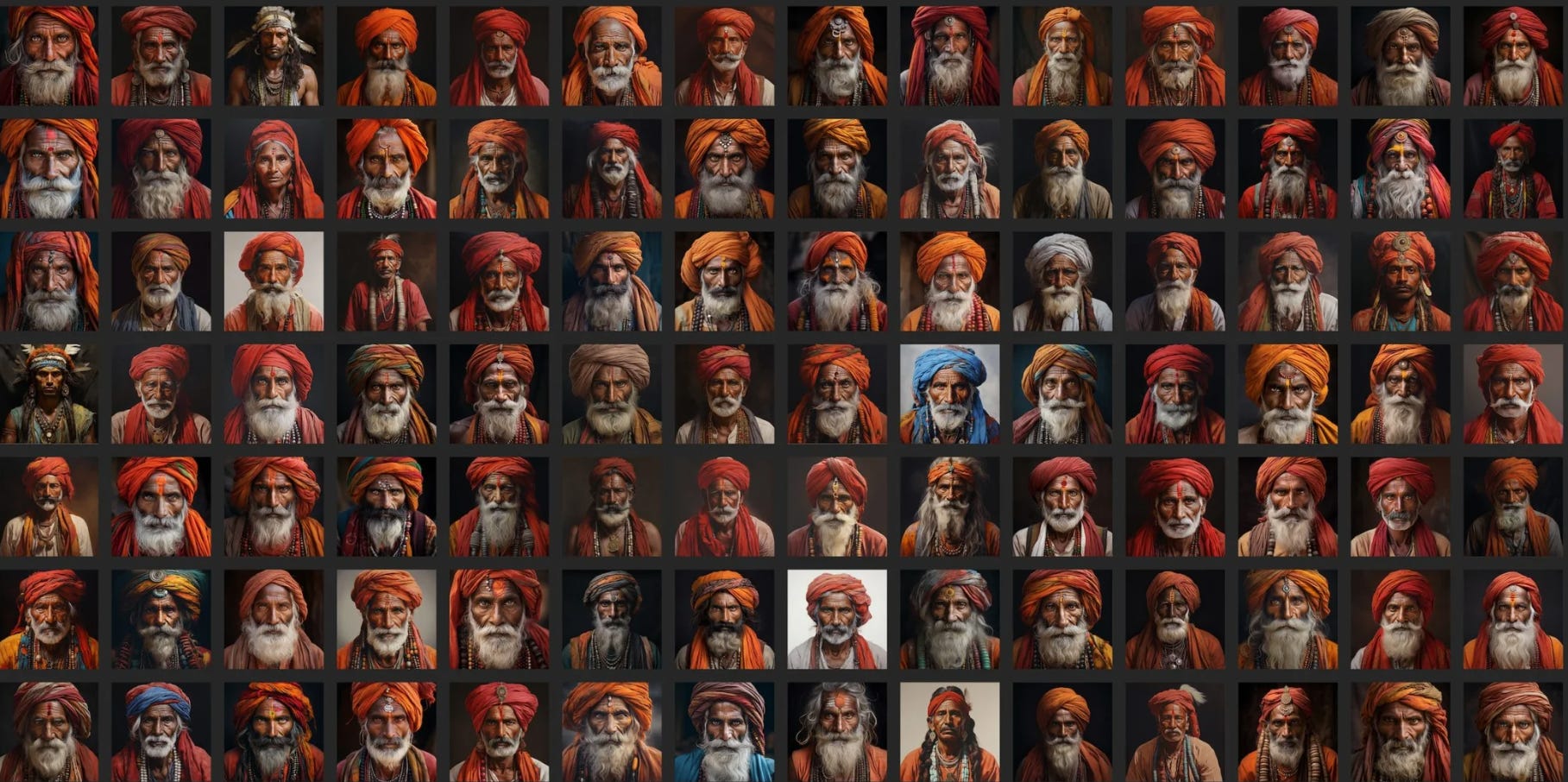
Africa accounts for 0.6% of global installed data centre capacity despite accounting for 19% of the world’s population. The US and China hold 60% of all AI patents. That has real implications for who benefits from—and sees themselves in—AI. AI systems risk perpetuating stereotypes and biases. In 100 images of “an Indian man” using a popular generative AI text-to-image system, for instance, nearly all featured an old man with a beard and turban.
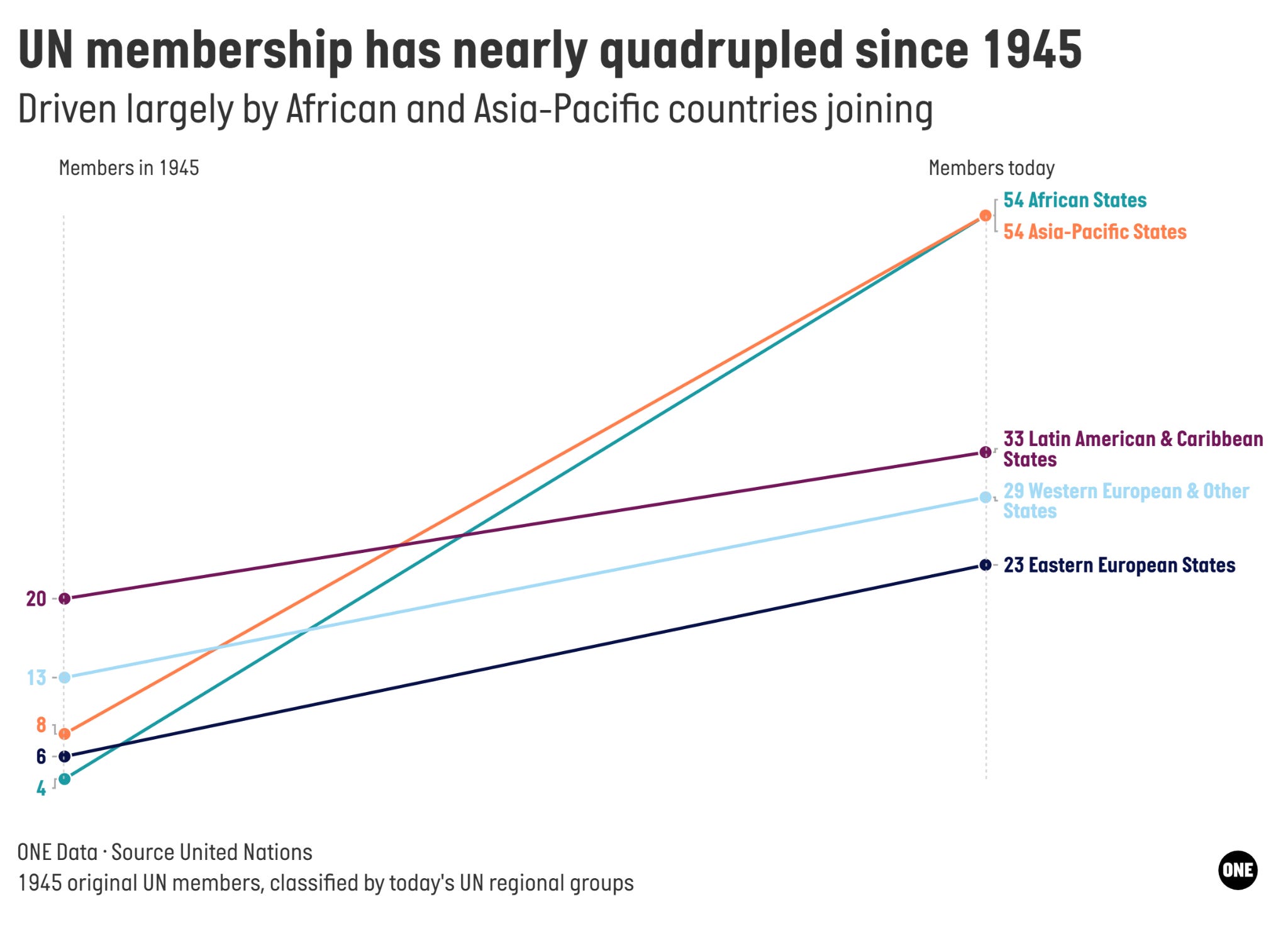
2. Global institutions need an overhaul. Again and again this week, leaders and others highlighted the urgent need for reforms of international institutions and systems. The UN Security Council, in particular, drew plenty of criticism given the outsized influence of the five permanent members (China, France, Russia, UK, US). That status was given to them in 1945 as an incentive for their participation, and at the time it made some sense given their place in the world order at the end of World War II.
But as we noted last week, it’s worth asking whether an institution designed in a very different world is still fit for purpose in this one. A lot of countries have come to the conclusion that it isn’t. The credibility and relevance of the Security Council and other international institutions exist only as long as countries continue to have trust in them. Without reforms, the risk that they lose both increases.
FROM THE ONE TEAM:
ONE launched ONE Academy, a new online platform that brings ONE’s proven advocacy training to the next generation of African leaders, equipping them with the smarts, skills, and network to drive change.
David McNair on the question almost no one asks at UNGA, and on why individual freedom, endless choice, and zero friction haven’t delivered happiness.
Emily Wigens on what a 40% cut to the Global Europe budget would mean in the real world.
IN THE QUEUE:
The unbearable bleakness of “inevitability.”
It’s conference season. Who is in the room?
Me and my AI against the world.
ONE Data provides cutting edge data, tools, and analysis so that we can fight together for a more just world. See for yourself.