

The ghost of crises past
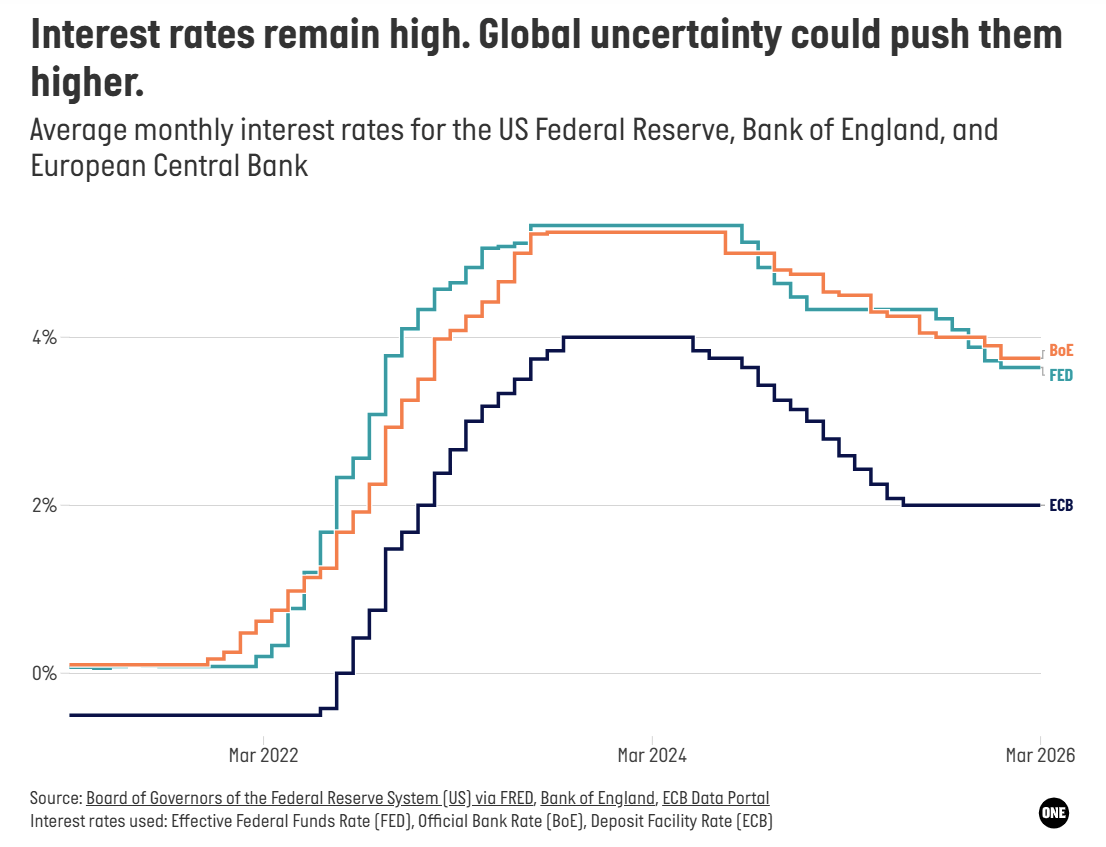
There’s been a lot of discussion (including by us) about the likely effects of the Iran war on African countries, including higher interest rates and living costs. But even before the war, those countries were quietly experiencing higher borrowing costs, driving up the cost of sovereign existence. The war is likely to exacerbate those costs, but the underlying pressures on governments were already in place.
New analysis by my colleagues at ONE Data reveals a troubling pricing trend for new lending over the past five years. Higher lending costs couldn’t come at a worse time, not least of all because international aid declined by 23% in 2025, a $50 billion contraction that no country saw coming.
We’ve seen this movie before: ballooning debt and unsustainable debt payments in the Global South. The question is whether decision-makers will find ways to course correct before it’s too late.
— Joe Kraus, Senior Director, ONE Data
3 things to know
1. African borrowing costs have surged 91% amid global interest rate pressures. These countries were paying 2.7% on average across all creditors in 2020; by 2024, that had risen to 5.1%. With African debt doubling over the past decade, rising debt costs pose a threat to growth, stability, and people’s wellbeing.
Explore an interactive version
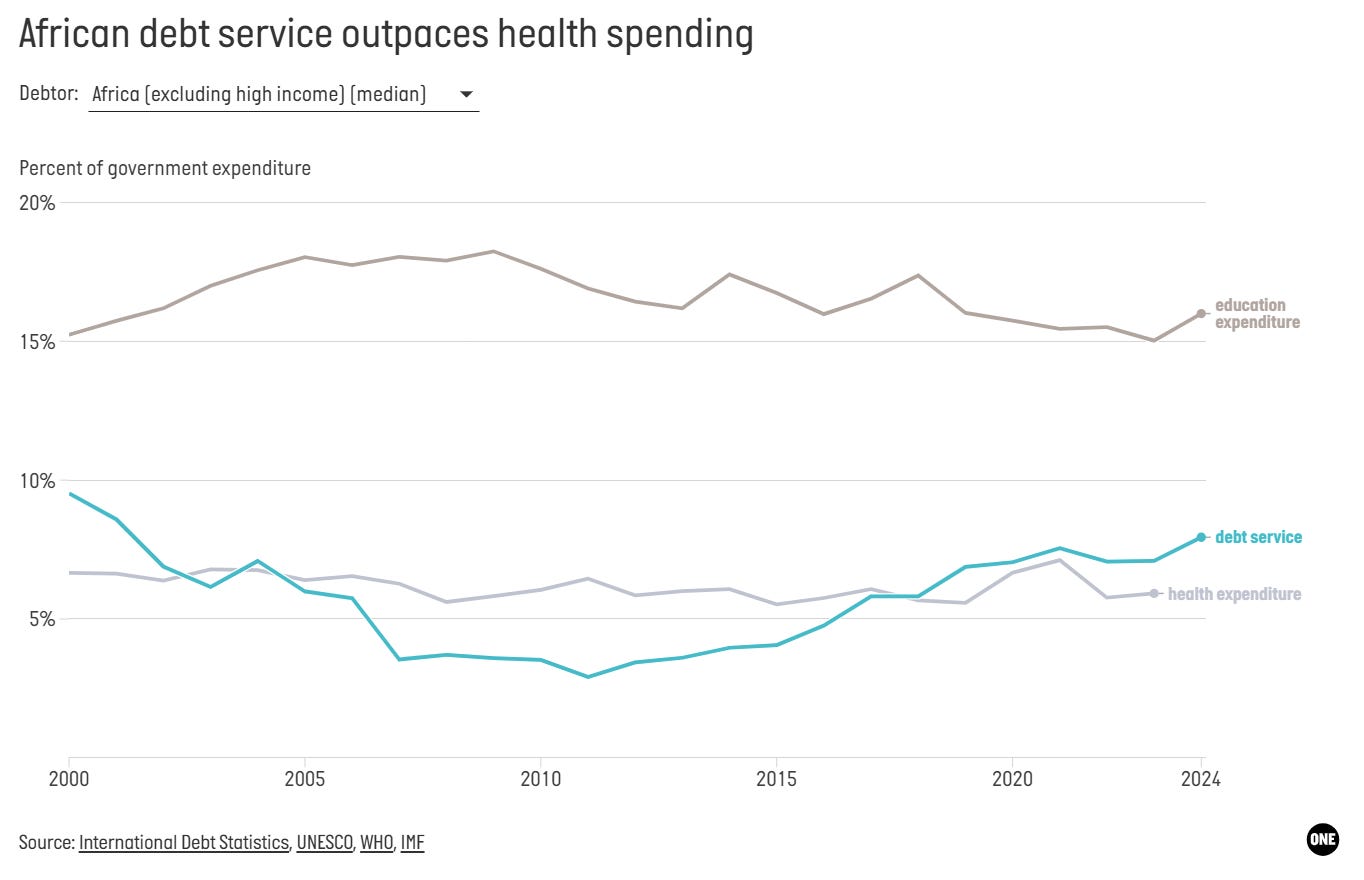
Why it matters: Debt plays an important role in supporting economic growth and funding investments in health, education, and infrastructure when domestic resources are insufficient, but it also carries risks. High debt levels and debt servicing costs can divert resources away from essential public services: 28 African countries spend more on debt than they do on health. And rising interest rates will put already at-risk countries in further jeopardy. Even before the current crisis, 21 low-income African countries were either bankrupt or at high risk of debt distress.
Explore an interactive version
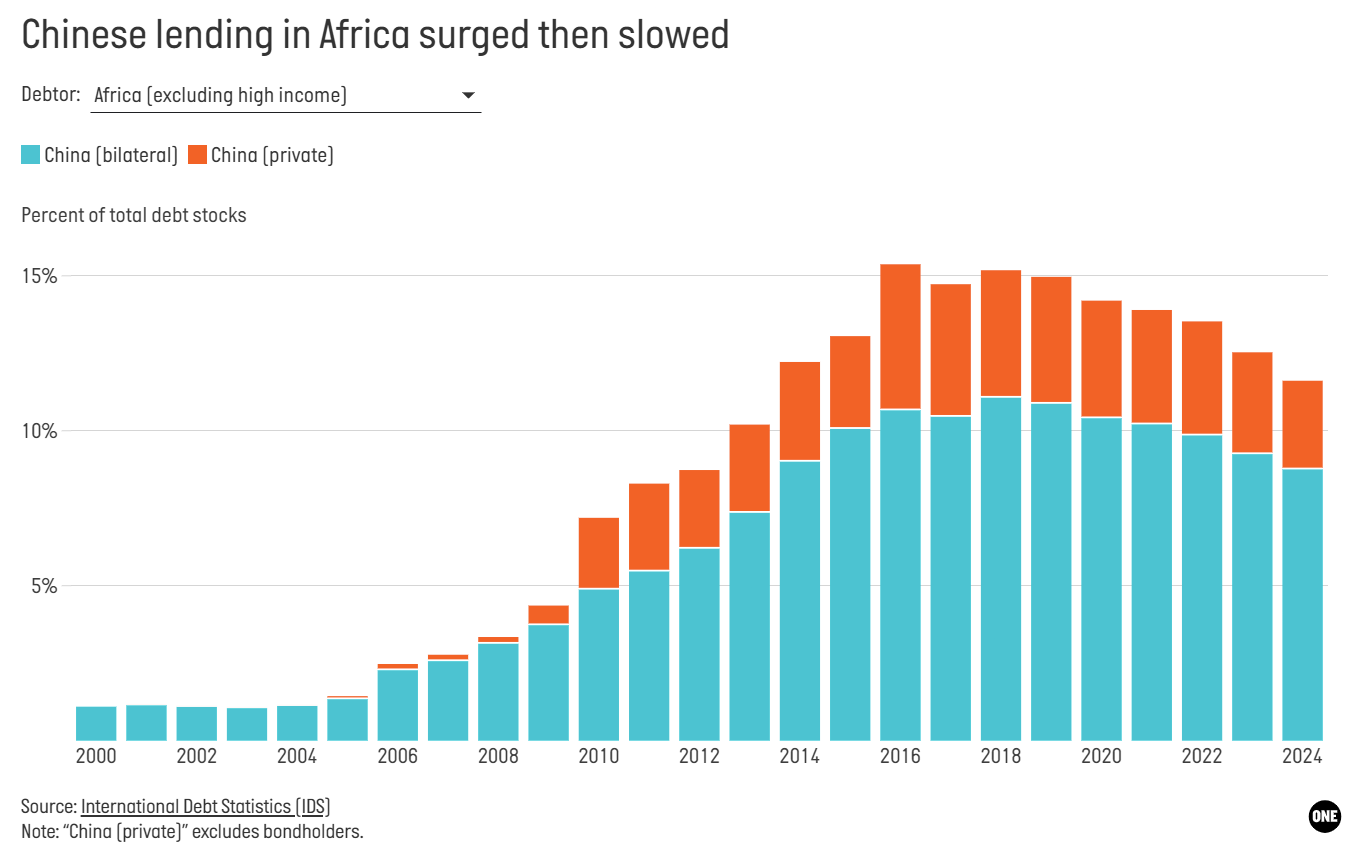
2. China’s African lending rates climbed 3.2 percentage points. China’s lending rates have risen from an average of 2.5% for African countries in 2020 to 5.7% in 2024. China also happens to be Africa’s biggest bilateral lender. Its public and private lenders held over $82 billion of Africa’s external debt in 2024, though the rate of Chinese lending to Africa has slowed in recent years.
Explore an interactive version
Why it matters: Chinese lending has long been cited as an alternative to Western-dominated finance. But Chinese finance has undergone a “Great Reversal” in recent years. China went from being a net provider of finance—transferring $48 billion to low- and lower-middle-income countries (via official and private lenders) a decade ago—to a net extractor of $24 billion. Africa has experienced the most dramatic reversal in Chinese finance. It went from receiving $30 billion to paying out $22 billion, a $52 billion swing.
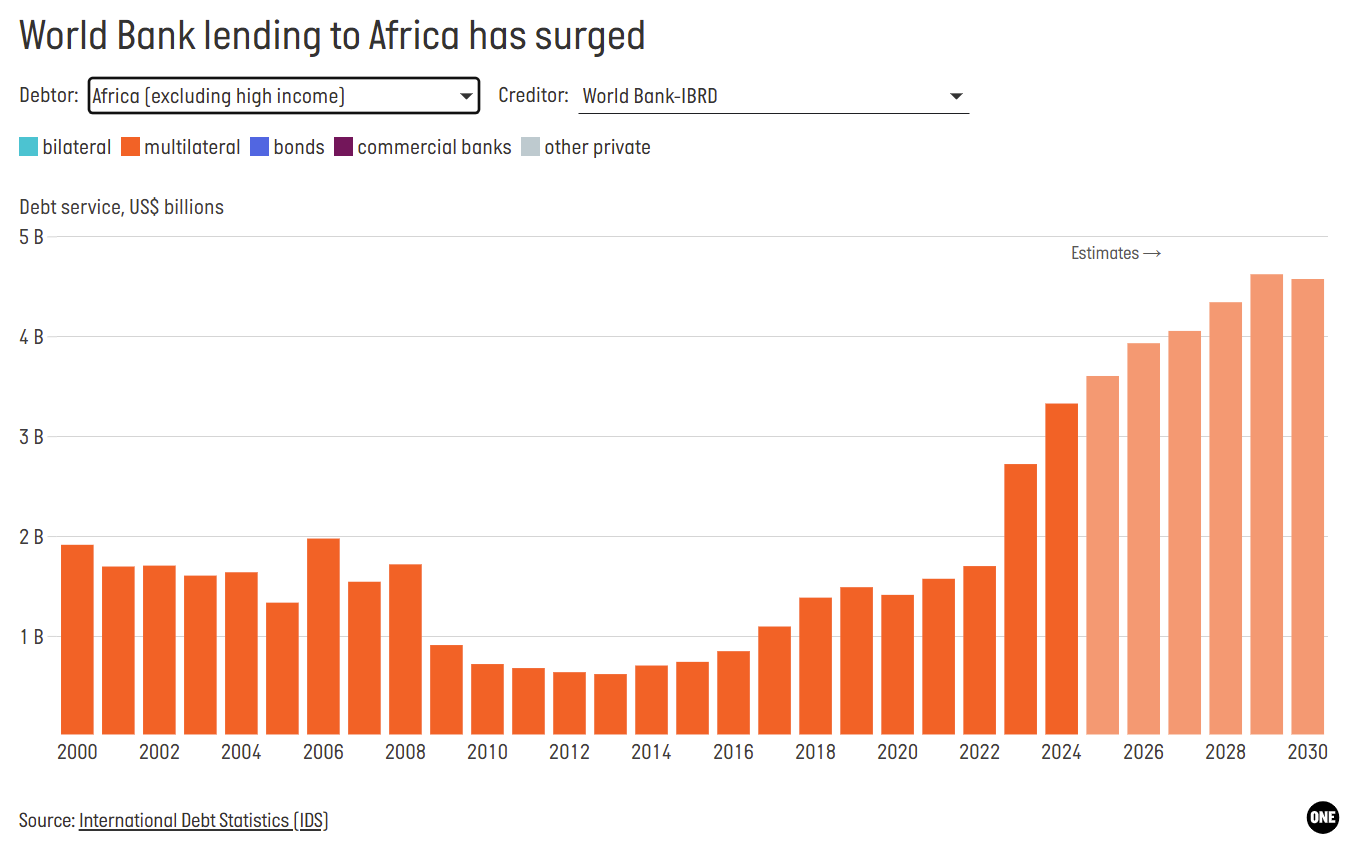
3. World Bank IBRD rates have risen 3.8 percentage points. World Bank lending to Africa has surged, jumping from under $40 billion in 2017 to an estimated $100 billion last year. But the price tag on that borrowing has increased as well. The cost of borrowing from the World Bank’s International Bank for Reconstruction and Development (for IBRD countries) rose from 1.4% to 5.2% between 2020 and 2024.
Explore an interactive version
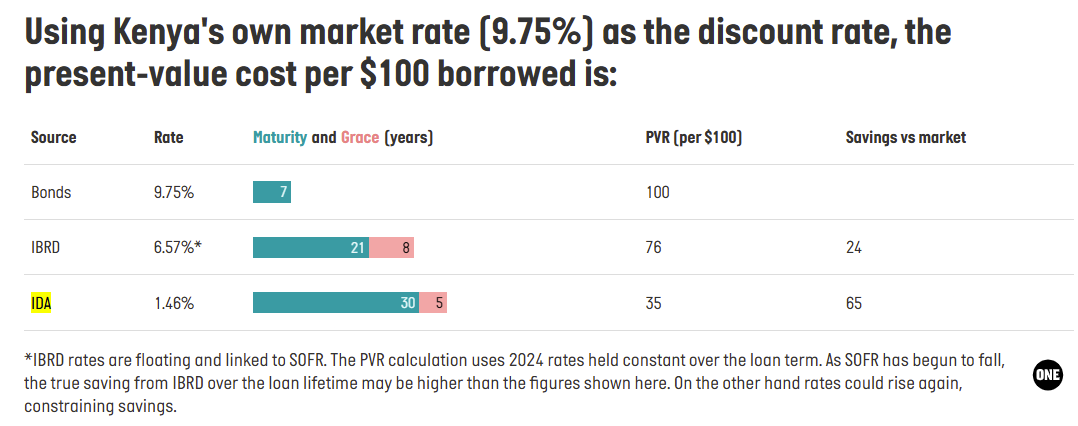
Why it matters: While IBRD lending has become more expensive, it is still far cheaper than markets. In 2024, every $100 from IBRD cost $78 in present value, a savings of $22 relative to market terms. This was narrower than in earlier years (the savings reached $52 per $100 in 2022) because IBRD rates rose along with benchmark rates. The longer maturity and grace periods of IBRD loans compared to the bond market push principal repayments far into the future, making them a more attractive (and less expensive) option. The stable low rates of the World Bank’s International Development Association (IDA) loans are an even better option for qualifying countries.
Explore an interactive version
FROM THE ONE TEAM:
ONE Data’s analysis on the rising cost of debt was featured in Bloomberg, Reuters, Semafor, CNBC Africa, Africa Business, and Financial Post, and referenced by senior officials at the IMF & World Bank Spring meetings.
David McNair spoke to the World Bank about how development finance resembles a Shakespearean tragedy, and to Devex about the Spring meetings.
Sara Harcourt details the key findings of ONE Data’s analysis on lending costs.
IN THE QUEUE:
What happens in Sudan will not stay in Sudan.
“We’ve won this war”: Inside the Sudanese army’s quest for legitimacy.
Money for nothing: the role of evidence in GiveDirectly’s success.
ONE Data provides cutting edge data, tools, and analysis so that we can fight together for a more just world. See for yourself.