

Debt squeeze
Horns blare as Ariunaa inches into Mongolia’s capital city, Ulaanbatar. The city is a toxic haze-filled bowl, as millions burn coal for heat to survive the -30°C (-22°F) temperatures. Ariunaa didn’t used to have an hour and half morning commute. But like many working professionals, she made the choice to move to the forests far outside the city in search of fresh air after she had a baby.
Ariunaa is one of the lucky ones. In Ulaanbaatar, many families have no option but to live in the informal settlements (ger districts) that surround the city and are denied the basic human right to breathe. Ulaanbaatar is one of the most polluted cities in the world, and every year, 4,350 Mongolians die prematurely because of it.
These deaths are preventable. And yet in 2025, Mongolia paid more for debt service than it did for health or education in 2024, and far more than it spent on clean energy. More and more countries are having to make impossible choices to service their debt, and borrowing costs keep surging.
The first steps to addressing a problem are identifying and understanding it. That’s why the ability to access data is so crucial, and why we built the Development Finance Observatory: so that anyone can easily find and use data to make people’s lives better.
New analysis by my colleagues at ONE Data—done in a fraction of the time it would have taken without the Development Finance Observatory—reveals the troubling outlook of debt stress in the years to come, as countries grapple with compounding shocks and decreasing aid.
— Rowan Mueller, ONE Data
3 things to know
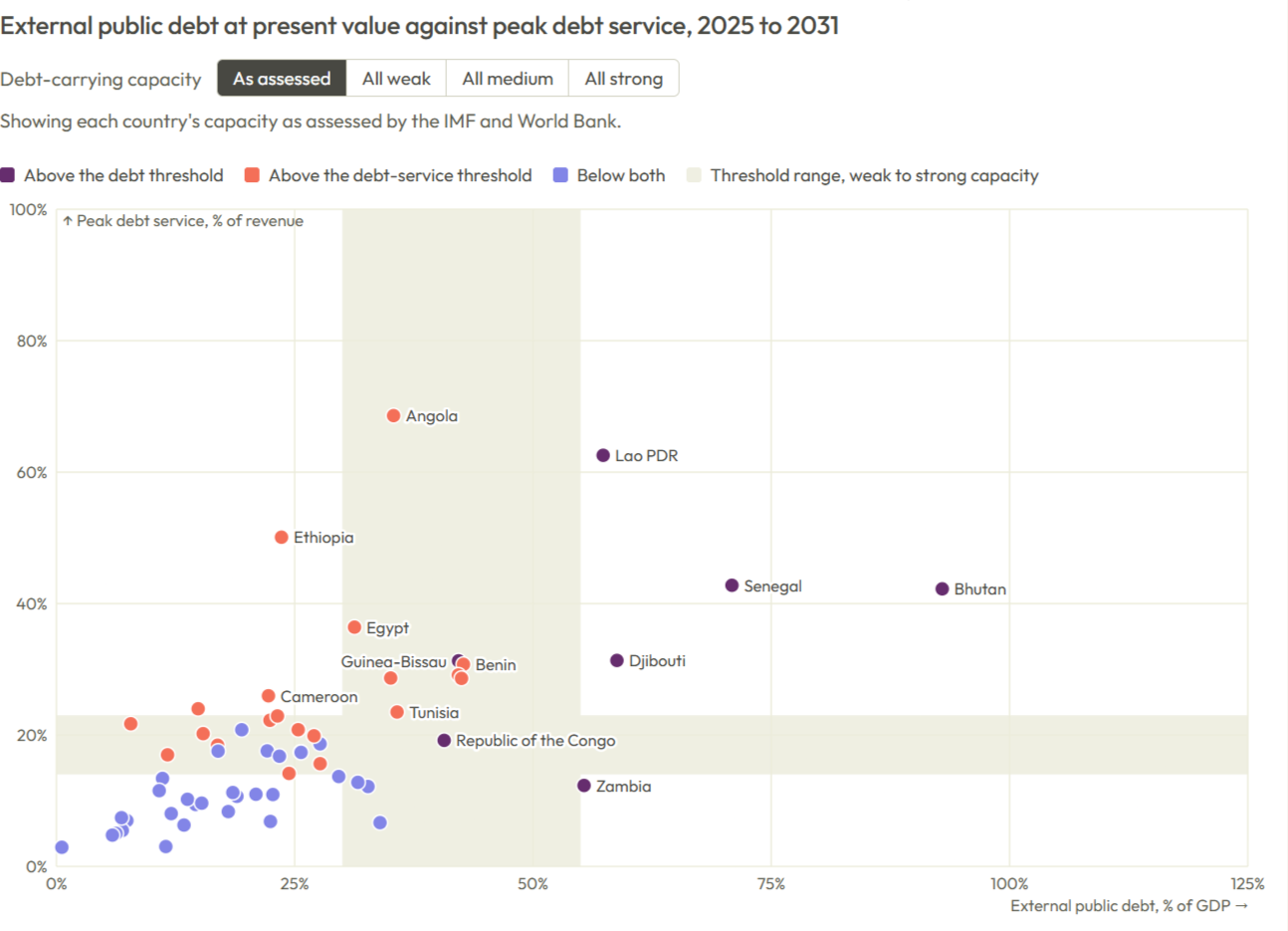
1. 27 out of 58 low- and lower-middle-income countries are feeling the debt squeeze. That's according to the Finance for Development Lab's debt sustainability model, which we updated with the latest World Bank debt data. It reveals that seven out of 58 countries owe more than they can repay (i.e. insolvency). Another 20 will experience a year between now and 2031 when debt service payments consume too much of their revenue (illiquidity). That could cause those countries to cut essential spending or prevent them from borrowing more.
2. The same 20 countries grappling with illiquidity went from a $43 billion net inflow in 2020 to a $10.1 billion net outflow in 2023. That’s a rapid reversal. Net transfers are new loans received minus repayments and interest. The same countries facing illiquidity and a debt-service squeeze paid creditors more than they borrowed in 2023. That’s not good for anyone (unless you’re a creditor).
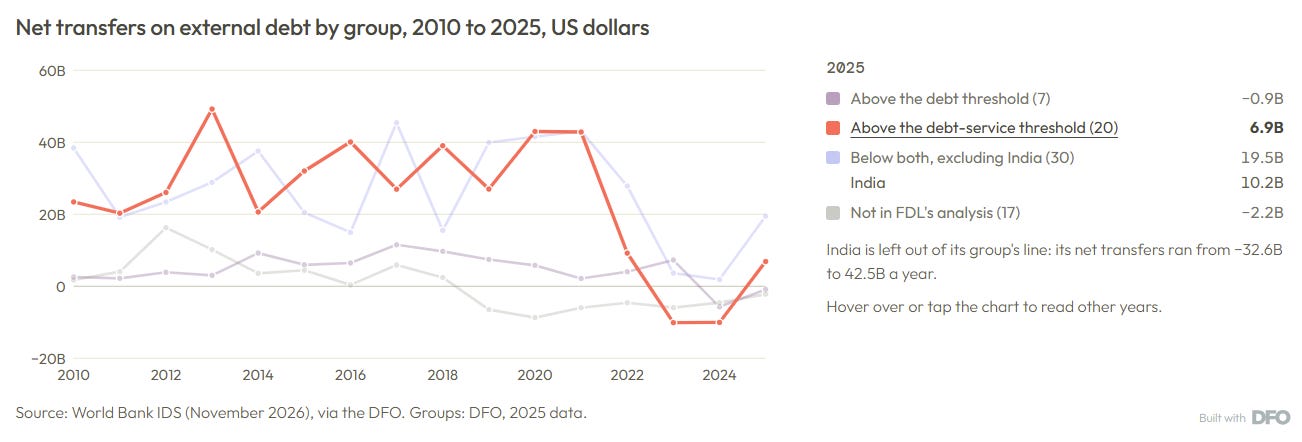
What’s driving this trend? For starters, higher global interest rates; rising bond yields; the economic effects of the pandemic; a shift toward commercial borrowing, which tends to carry less favourable terms than concessional lending; and governments subsidising food and fuel to mitigate the impacts of the wars in Ukraine and Iran. Higher interest rates and bond yields make debt more expensive, especially debt borrowed at market rates. So governments find themselves in a vicious cycle, taking on increasingly costly debt to protect their citizens from crises beyond their control.
3. 13 fragile countries have hit a tipping point: creditors taking more than donors gave. Those countries are home to over half a billion people. In 2024, they cumulatively paid more to service their debt ($53 billion) than they received in aid ($14.9 billion), foreign direct investment ($8.8 billion), and other official flows ($7.3 billion), combined. That is not a recipe for development.
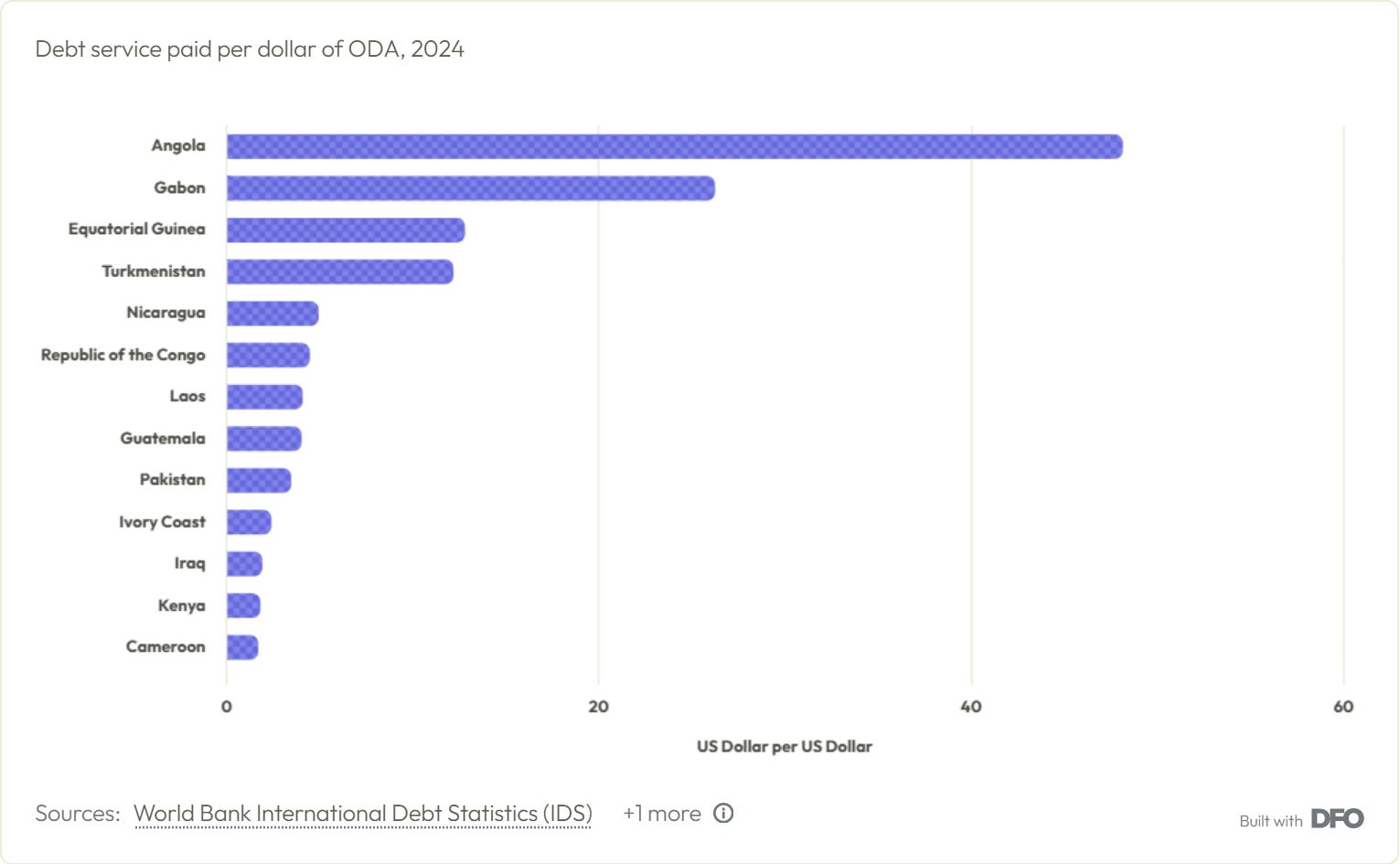
Fragile states are already strapped for cash. The drastic aid cuts of the past few years, most notably the 23% decline in 2025, aren’t going to help. Especially when aid cuts can actually lead to more conflict.
FROM THE ONE TEAM:
David McNair on what he got wrong about development, and on the stark futures awaiting rich countries if they shut down migration.
Adrian Lovett with an update on how UK aid cuts are going.
Check out the latest post from the Insider on Whatsapp:
Sign up to get real-time updates on issues impacting development.
IN THE QUEUE:
Debt problems of the richest countries are trickling down to the poorest.
Accountability Lab and Civic Strength Partners are gathering data on the health of NGOs. To participate, take their 2026 Civic Resilience Survey. Results will be available at civicresilience.ngo.
ONE Data provides cutting edge data, tools, and analysis so that we can fight together for a more just world. See for yourself.