

The World Cup’s less visible significance
In March, on the night the Democratic Republic of Congo qualified for its first World Cup in 52 years, thousands of fans ran through rain-soaked streets in Kinshasa. Last November, when Haiti qualified for the first time since 1974, fireworks erupted across a country where gangs control 90% of the capital. Even the gangs joined the celebrations.
We tend to treat the World Cup as a month of entertainment, but for many of the 48 nations at this year’s tournament, it’s also something else: a rare force for national unity, a source of hope, and a mirror of the global economy.
— Yahya Rana, visiting researcher from the Harvard Kennedy School
3 surprising things about the World Cup
1. When national teams win, nations pull together. Of the 48 teams at this year’s World Cup, 10 come from countries facing internal conflict or insecurity, home to around 780 million people. For them, the tournament is more than entertainment. Economists studying African national teams found that in the days after an important victory, citizens were 37% less likely to identify primarily with their ethnic group and 30% more likely to trust people of other ethnicities. By comparing teams that qualified for major tournaments with those that didn’t, the researchers found that qualifying countries experienced roughly 9% less conflict in the months that followed.
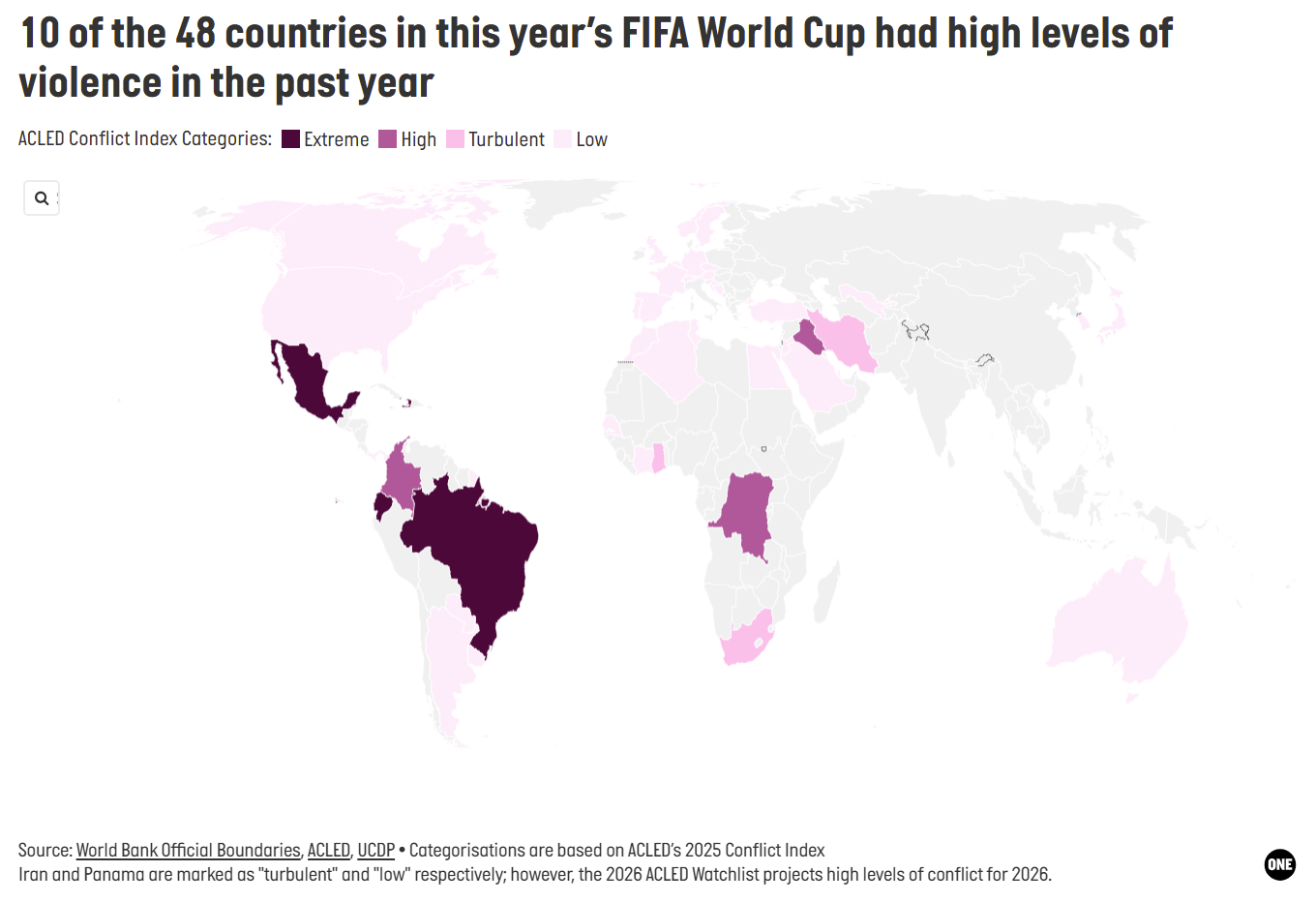
Why it matters: Former Senegal international footballer Ferdinand Coly put it best: “When Senegal plays, there is no political affiliation. It’s simply Senegal.” For a few weeks, hundreds of millions of people in divided countries get to see their nation whole. It may be the cheapest unity a country ever gets. That was visible during this year’s tournament. In Bunia, a city in DR Congo’s conflict-scarred east, viewing centres were packed for every national team match. One fan told Al Jazeera the team made Congolese proud “as if nothing were wrong.” In Baghdad, where the Iran war’s spillover has killed at least 100 Iraqis, fans flooded the streets at dawn; “The Iraqi people are united across all sects,” one told AFP. In Port-au-Prince, residents cleaned streets and built communal viewing areas to watch matches together during blackouts.
2. Football is one of Africa’s biggest exports. African players make up over 14% of footballers across Europe’s top five leagues, drawn especially from West Africa. Like coffee, cocoa, and critical minerals, the raw material is produced at home and the value is added abroad. It is Europe’s leagues, competition, and exposure that turn a talented teenager into a multi-million-dollar asset. Clubs spent a record-adjacent $8.59 billion on international transfer fees in 2024. That money is exchanged almost entirely between clubs in wealthy countries. Some players benefit enormously, of course, but relatively little of that money makes it back home (with some exceptions, as we note below).
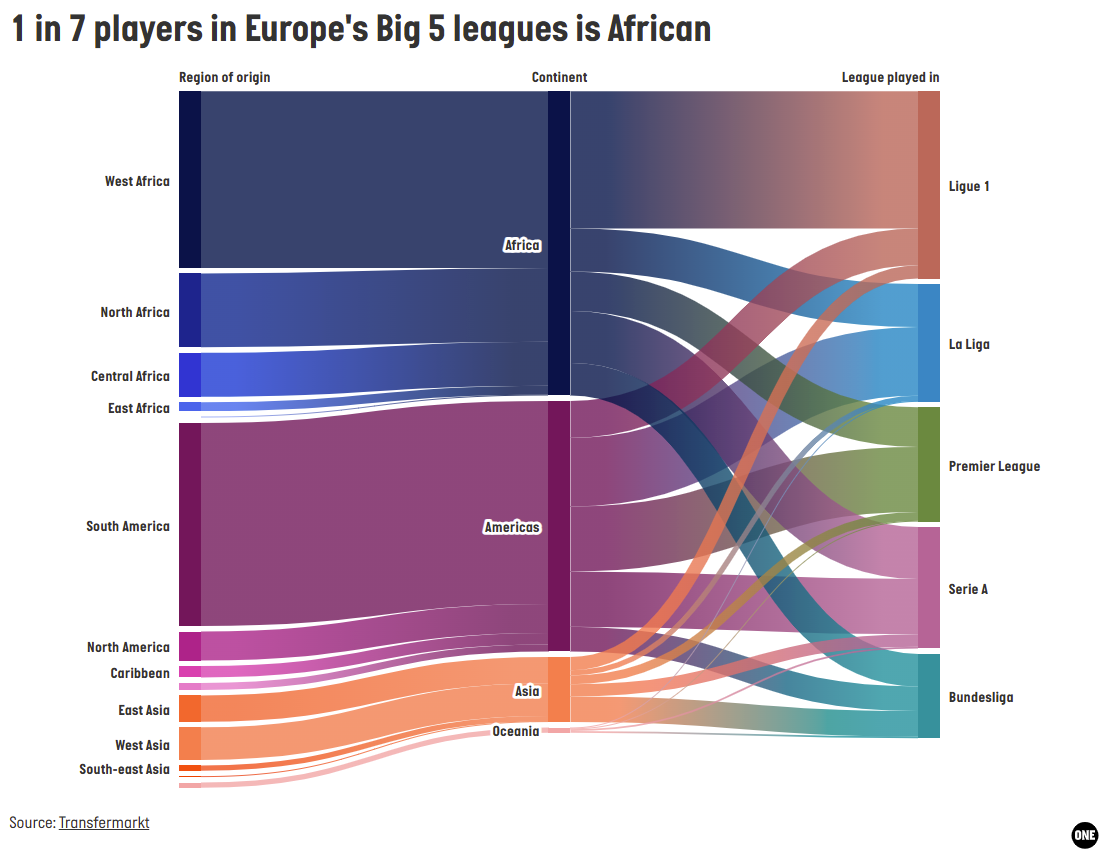
Why it matters: This is the same value-capture story we’ve told about coffee and chocolate (Africa grows it but only keeps a sliver of the retail value) and critical minerals (raw ore is exported, but processed value is retained elsewhere). The pattern generalises: whoever owns the value-adding stage captures the wealth. For football, that means the long-term solution isn’t charity, it’s building the “refinery” at home by developing competitive leagues, professional academies, and infrastructure that lets African football keep more of the value African players create.
3. Money that flows back home comes mostly from generosity, not via football itself. FIFA rules earmark a small percentage of every transfer fee for the clubs that developed a player. FIFA launched a dedicated Clearing House in late 2022 to enforce this, but only about $157 million was distributed to training clubs worldwide against $8.6 billion spent on player transfers in 2024. What reaches Africa instead mostly arrives informally. For example, Senegal’s Sadio Mané has poured over £700,000 into his home village of Bambali to create a hospital serving 34 villages, a school, and to provide for monthly family stipends.
The hospital that Sadio Mané funded in his hometown of Bambali, Senegal
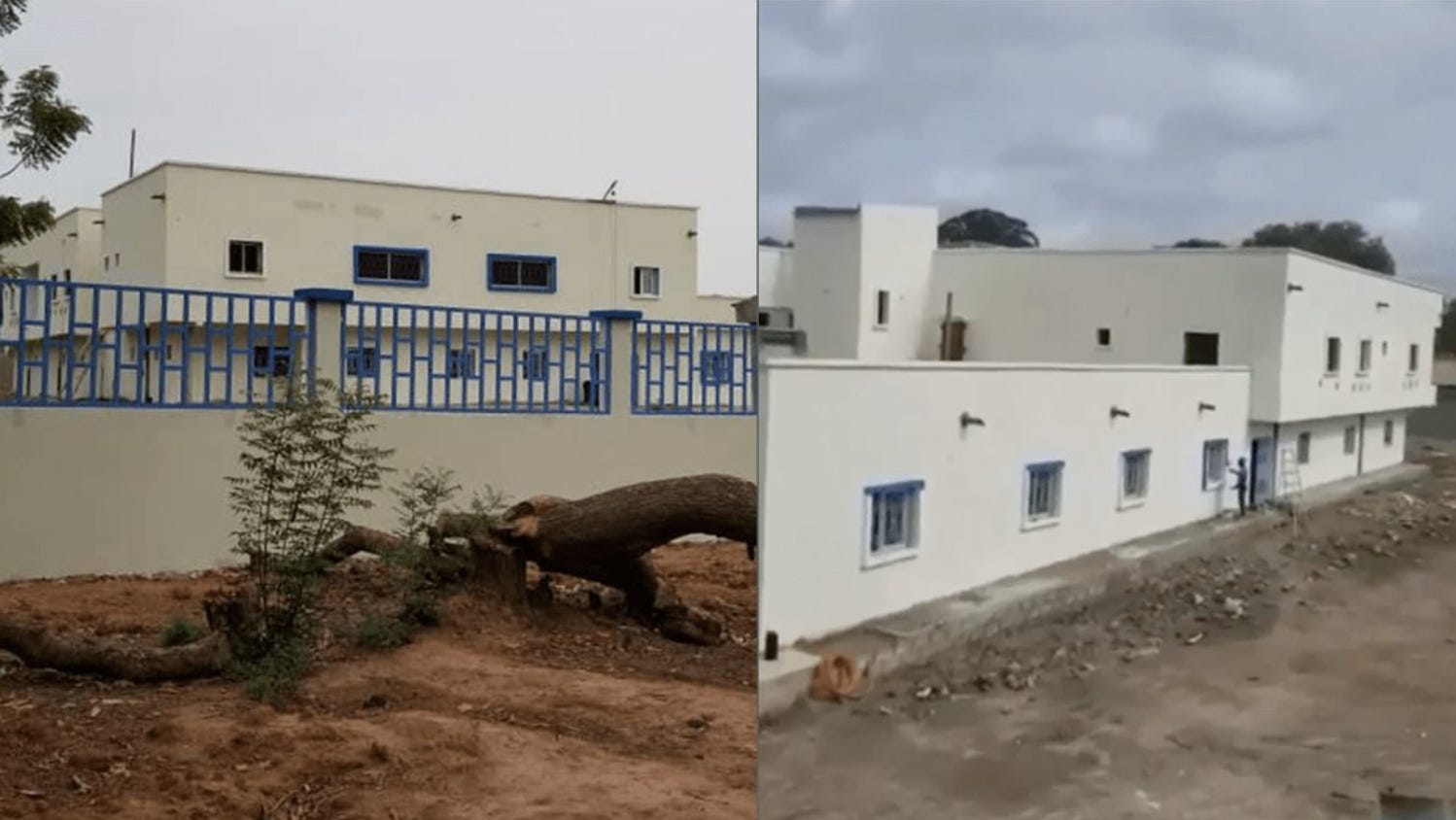
Source: Citi Sports
Why it matters: Generosity is not a system. Mané funded the hospital’s construction, but had to ask the state to provide the medical personnel. Only public institutions can run a clinic sustainably. That’s especially true at scale. Informal flows like charity and philanthropy directed home can be transformative for the communities that receive them. But their voluntary and unpredictable nature makes them poor substitutes for structural mechanisms and public investment, the very things that would get a boost if the countries that produce football talent found ways to capture more of its value.
FROM THE ONE TEAM:
More than a match: Exploring North America – Africa connections through football, ONE’s World Cup collaboration with the George W. Bush Institute.
ONE’s CEO Ambassador Mark Green on why Africa is losing its health care talent.
William Menson on whether donors or governments really shape health policy in Africa.
…
IN THE QUEUE:
The system we won’t name.
Why the poorest countries send the fewest migrants.
The mechanics of building strong states in 21st century Africa.
…
ONE Data provides cutting edge data, tools, and analysis so that we can fight together for a more just world. See for yourself.
Interesting article! refreshing to read about the WC through this lens